 Get Insights


EU MDR Tightens Transition on Clinical Evidence
On June 14, 2026, the European Commission issued an MDR implementation notice that raises the practical bar for CE submissions and certificate renewals from the third quarter of 2026 onward. The core change is not simply procedural: it requires a complete, traceable clinical evidence chain aligned with ISO 14155:2020, which directly affects certification planning, technical documentation, and delivery preparation for products such as Phaco systems, Femtosecond lasers, and H2O2 plasma sterilizers. For companies already managing EU market access, the development is worth close attention because it points to a stricter review focus and a measurable increase in localized clinical data validation costs.
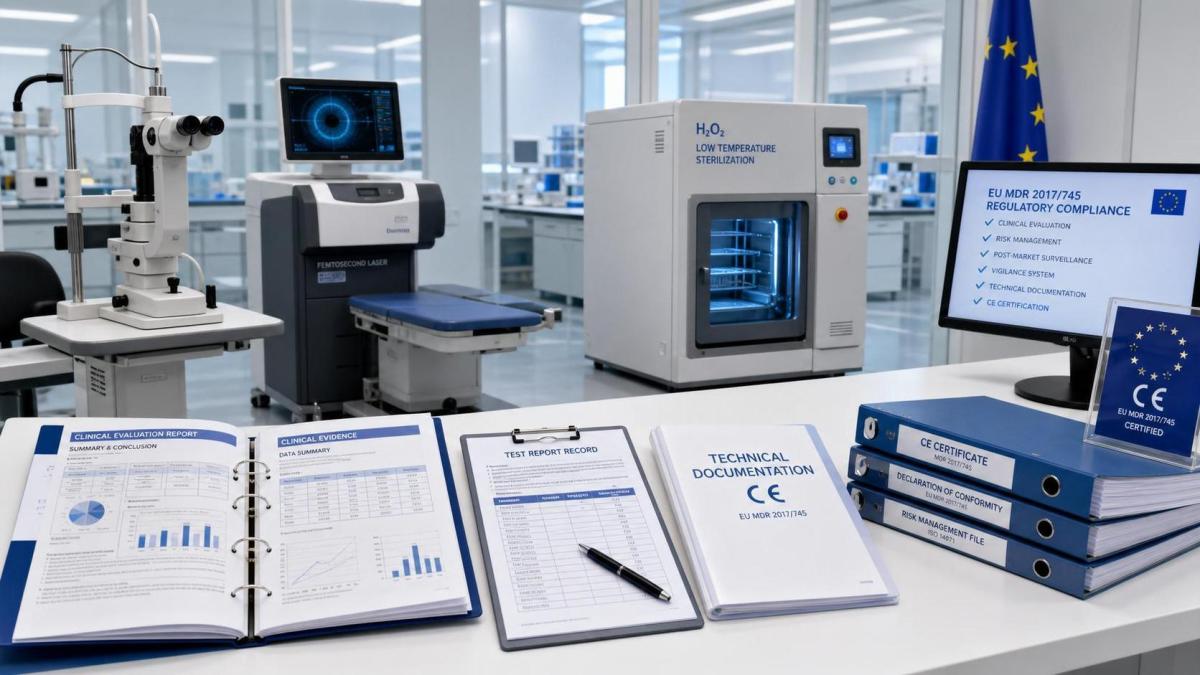
What the June 14 notice explicitly requires
The confirmed information is limited but clear. According to the event summary provided, the European Commission released an MDR execution notice on June 14, 2026. It states that from the third quarter of 2026, all newly submitted CE certification applications and renewals of existing certificates must include a complete and traceable clinical evidence chain that complies with ISO 14155:2020.
The same summary also states that the cost of localized validation of clinical data is expected to rise by more than 30% for products including Phaco systems, Femtosecond lasers, and H2O2 plasma sterilizers. No further implementation detail, policy code, or supporting procedural clarification was provided in the input.
Where pressure is likely to appear first in the value chain
Manufacturers preparing new submissions or renewals
From an industry perspective, manufacturers are likely to feel the first operational impact because the new requirement is tied directly to CE application files and renewal dossiers. The key pressure point is document completeness: clinical evidence must not only exist, but also be traceable and aligned with ISO 14155:2020. That means regulatory, clinical, and technical teams will need to pay closer attention to whether their evidence chain can withstand review as a connected record rather than as isolated reports.
Certification and testing-related service providers
Certification-related firms and testing support organizations may also face heavier workloads in evidence review, document coordination, and gap identification. Analysis shows that where localized clinical validation costs are rising, service demand may shift toward earlier dossier checking, evidence mapping, and compliance alignment. What deserves closer attention is whether applicants are able to present consistent documentation across clinical records, technical files, and renewal materials.
Export and delivery planning teams
For export-oriented businesses, the notice may affect delivery timing even without any announced trade rule change. The reason is practical: when certification or renewal files require more complete clinical traceability, shipment scheduling, distributor commitments, and customer delivery planning may need to account for longer internal preparation cycles. Companies involved in EU-bound deliveries should therefore watch compliance documentation readiness alongside production readiness.
Procurement and downstream buyers
Procurement teams and downstream buyers, especially those sourcing affected device categories, may need to review supplier qualification materials more carefully. Observably, if localized validation costs rise by more than 30% for certain products, the impact may not remain limited to certification budgets alone; it may also influence quotation validity, procurement timelines, and document requests tied to tenders or supplier onboarding. That is an area to monitor rather than a confirmed outcome.
What companies should check now
Review the continuity of the evidence chain
Analysis shows that the immediate issue is not only whether clinical evidence exists, but whether it forms a complete and traceable chain that can be presented coherently for new CE applications and renewals. Companies should focus on internal checks across clinical records, technical documentation, and renewal files to identify missing links or inconsistent references.
Reassess cost exposure for localized validation
For the product categories named in the input, the stated increase of more than 30% in localized clinical data validation costs deserves direct budgeting attention. This does not in itself confirm broader price movement, but it does suggest that compliance-related cost assumptions may need updating in certification plans, supply contracts, and project timelines.
Track how review expectations appear in documents
Because the input does not provide detailed enforcement guidance, companies should treat the notice as a signal to monitor how the requirement is reflected in certification checklists, technical file expectations, tender documents, and supplier qualification requests. It is more appropriate to understand this as a point requiring active document surveillance rather than as a fully mapped execution framework.
Prepare for knock-on effects in renewal timing
Existing certificate holders should pay particular attention to renewal sequencing. If the completeness and traceability of clinical evidence become a more visible review threshold from 2026 Q3, internal approval timing, supporting report readiness, and external coordination with certification-related partners may all become more sensitive operational points.
Why this looks like an execution signal
Observably, this update is more than a general policy reminder because it links MDR review expectations to a concrete timing point in 2026 Q3 and to a specific documentation standard, ISO 14155:2020. At the same time, analysis also shows that the input does not provide the full enforcement pathway, review methodology, or formal interpretation details. For that reason, it is more appropriate to understand the development as a stronger execution signal with immediate compliance implications, while still leaving room for further observation on how the requirement will be applied in practice.
What deserves closer attention is not only the rule text itself, but also the follow-through: whether certification review language becomes more detailed, whether procurement-side document requests become stricter, and whether affected product categories experience longer preparation cycles for submission or renewal.
How the market should read the update at this stage
At this stage, the notice is best understood as a tightening of compliance expectations around clinical evidence integrity under the EU MDR transition framework. It does not by itself establish every downstream commercial consequence, but it clearly raises the importance of traceability, document consistency, and localized validation planning for affected products.
A neutral reading is that this is already a relevant operational change for companies with pending CE applications or renewals, while the full market effect still depends on subsequent execution language, review practice, and industry response. In other words, the message has practical weight now, but some of its business impact still needs continued observation.
Basis of this article and points requiring follow-up
This article is generated based on the user-provided news title, event date, and event summary. Typical source types related to developments of this kind may include official notices, regulator releases, trade or customs authority information, industry association updates, standards organization documents, and reporting by authoritative trade media.
No specific official source link was provided in the input, so the exact official publication link still requires further verification. Follow-up attention should remain on any detailed policy clarification, certification enforcement language, tender document changes, market feedback, and how companies actually implement the new evidence-chain requirement in submission and renewal workflows.
Recommended News
 Choosing Implant Dentistry Systems for Safe, Efficient Oral Surgery WorkflowsImplant dentistry systems for oral surgery: evaluate precision, digital workflows, sterilization, traceability, and supply support to build safer, more efficient surgical care.
 Where Wearable Rehab Technology Delivers Measurable Gains in Stroke RecoveryWearable rehab technology helps stroke programs improve gait, balance, arm use, and home practice with actionable data that guides smarter therapy decisions.
 Hospital Medical Device Technical Evaluation: Safety, Fit, and Lifecycle CriteriaMedical device technical evaluation for hospitals: explore safety, clinical fit, infection control, serviceability, and lifecycle criteria for smarter purchasing decisions.
 Medical Device Product Categories: How Hospitals Classify Equipment for Safer PurchasingMedical device product categories guide safer hospital purchasing. Compare clinical workflows, infrastructure, consumables, infection control, and lifecycle costs.
 Digital Dentistry Equipment Price: Budgeting for Scanners, CAD/CAM, and ROIDigital dentistry equipment price guide: budget for scanners, CAD/CAM, software, service, and total ownership costs. Build a practical ROI case before you buy.
 Which Phacoemulsification Parameters Matter Most for Dense Cataract Cases?Phacoemulsification technology parameters for dense cataracts: compare energy delivery, vacuum, flow, IOP control, and surge response for safer, stable surgery.
 Medical Equipment Specification Standards: A Practical Guide to Compliance ReviewMedical equipment specification standards guide: review compliance, essential performance, clinical fit, utilities, and lifecycle risks for safer procurement decisions.
 How to Evaluate a Digital Dentistry Systems Factory for Clinic Equipment ProjectsEvaluate a digital dentistry systems factory with confidence: compare workflow integration, quality control, documentation, installation, and long-term service costs.
 How to Evaluate an Infection Control Systems Wholesaler for Hospital ProjectsChoose an infection control systems wholesaler with proven compliance, validation support, local service, and transparent lifecycle costs for reliable hospital projects.
 Minimally Invasive Dentistry for Pediatric Care: Techniques and Case SelectionMinimally invasive dentistry for pediatric care: discover case selection, sealants, resin infiltration, and pulp-preserving techniques for healthier young smiles.
 What Is Smart Rehabilitation Equipment? Key Technologies for More Measurable TherapyExplore rehabilitation equipment smart technologies that deliver measurable therapy, adaptive support, and actionable data to improve patient outcomes and clinical decisions.
 How Real-Time Force Feedback Improves Safety in Exoskeleton RehabilitationReal time force feedback improves exoskeleton rehabilitation safety by detecting unstable loading, adapting support, and preventing harmful movement. Learn how it works.
 How to Evaluate Hemodialysis Systems for Hospitals and Clinics in Southeast AsiaHemodialysis systems Southeast Asia: explore key factors for hospitals and clinics, from water treatment and safety to service, consumables, and lifecycle cost.
 Medical Exoskeletons Battery Life: What Determines Runtime in Daily Rehabilitation?Medical exoskeletons battery life depends on patient needs, therapy tasks, and charging workflows. Learn how to assess runtime for safer, more efficient rehabilitation.
 What Is Driving Adoption of Minimally Invasive Dentistry in Middle East Clinics?Explore why minimally invasive dentistry Middle East clinics are adopting digital workflows, precision care, and stronger infection control to improve patient outcomes and growth.
 What Drives Ophthalmic Surgical Device Maintenance Costs Over the Equipment Life Cycle?Ophthalmic surgical devices maintenance cost: uncover life-cycle drivers, uptime risks, contract terms, and smarter budgeting strategies for reliable surgical capacity.
 How to Evaluate a Neuromuscular Stimulation Equipment Supplier for Clinical UseNeuromuscular stimulation equipment supplier guide for clinical teams: assess compliance, usability, consumables, service support, and lifecycle costs.
 How to Select Neurorehabilitation Equipment for Stroke Recovery Programs?Neurorehabilitation equipment selection guide for stroke recovery programs: compare safety, workflow, clinical fit, data, and lifecycle value.
 What Drives Dental CBCT Maintenance Costs Over a Machine’s Service Life?Dental CBCT machines maintenance cost: uncover the service, software, downtime, and support factors that shape lifecycle budgets and smarter purchasing decisions.
 How to Evaluate Infection Control Systems in Southeast Asia for Compliance and Risk ReductionInfection control systems Southeast Asia: learn how to assess compliance, validation, documentation, and workflow risks to reduce audit exposure and improve patient safety.
 How to Evaluate Dental CBCT Systems in Europe for Compliance and Clinic FitDental CBCT systems Europe buyers compare should be judged on compliance, dose control, workflow fit, software integration, and service support. Learn how to choose the right scanner for your clinic.




Global Trade Insights & Industry
Our mission is to empower global exporters and importers with data-driven insights that foster strategic growth.
Search News
Popular Tags
Industry Overview
The global commercial kitchen equipment market is projected to reach $112 billion by 2027. Driven by urbanization, the rise of e-commerce food delivery, and strict hygiene regulations.