 Get Insights


FDA Tightens H2O2 Plasma Sterilizer Validation
On July 30, 2026, the U.S. FDA released a revised Sterilization Validation Guidance for H2O2 Plasma Devices, and the update is set to become mandatory from August 15. For manufacturers of H2O2 plasma sterilizers, export-oriented device companies, and hospital-facing supply chains, the change deserves close attention because it raises the documentation threshold around bioburden validation and directly affects whether products can remain on the path toward U.S. market access.
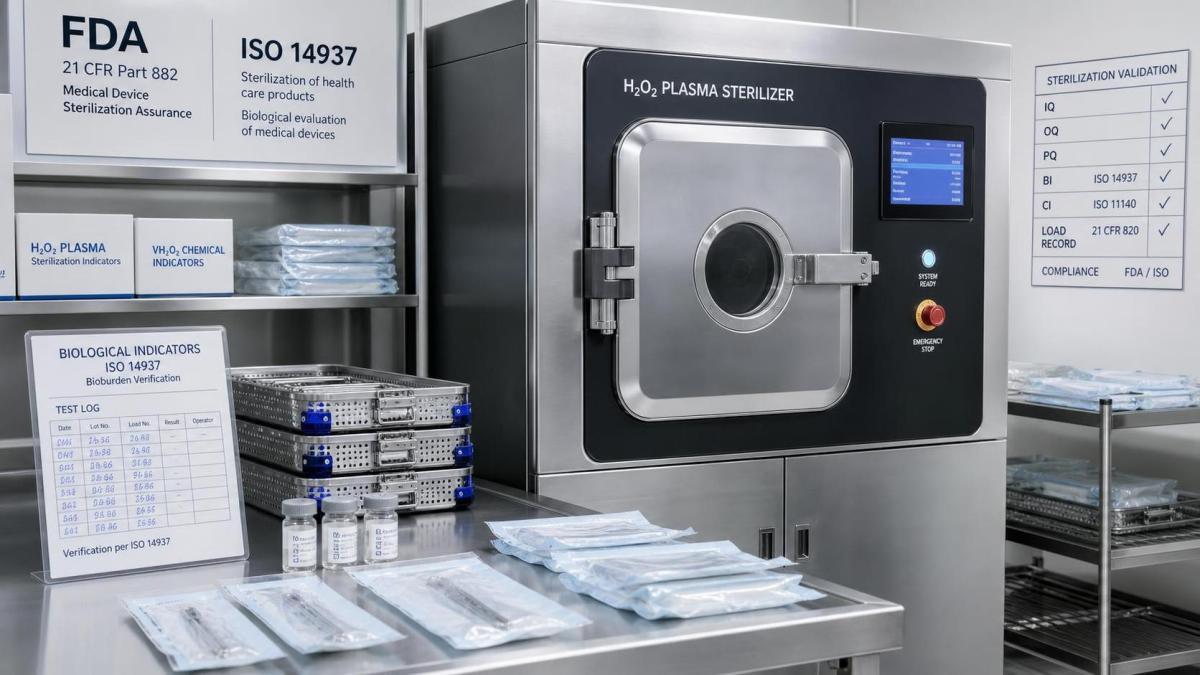
What the FDA revision now requires
According to the information provided, the revised guidance requires both new applicants and existing manufacturers of H2O2 plasma sterilizers to submit bioburden validation data packages certified under ISO 14937. The required data package must cover different device materials, loading configurations, and worst-case cycle parameters.
The update was issued by the FDA on July 30, 2026, and mandatory enforcement begins on August 15. The information also indicates that products failing to meet the updated requirement will not be able to enter U.S. hospital CSSD procurement lists.
Where the operational pressure is likely to appear
Manufacturers facing U.S. registration or continued compliance
From an industry perspective, the most immediate impact is on H2O2 plasma sterilizer manufacturers that are preparing new registrations or maintaining existing market access. They may be affected because the revised guidance now makes ISO 14937-based bioburden validation data a necessary submission element. The pressure is likely to concentrate in validation design, document preparation, and the ability to demonstrate performance across multiple materials, load setups, and worst-case conditions.
Chinese exporters managing dual CE and FDA pathways
The information provided explicitly points to an effect on Chinese exporters pursuing both CE and FDA certification routes. Analysis shows that the practical issue is not only regulatory filing, but also alignment between validation evidence and cross-market compliance planning. What deserves closer attention is whether existing validation packages are structured in a way that can support the U.S. requirement without causing delays in certification sequencing or product launch timing.
Hospital procurement-facing channels and service partners
For distributors, channel partners, and service providers linked to hospital procurement, the impact may emerge in qualification review, tender participation, and customer communications. The reason is straightforward: if a product cannot satisfy the revised FDA expectation, it may be excluded from U.S. hospital CSSD procurement lists. In business terms, that shifts attention toward proof of compliance, document readiness, and the timing of any required updates before procurement decisions are made.
What companies should monitor now
Whether current validation files are broad enough
Analysis shows that companies should first review whether their existing validation materials already cover the three areas highlighted in the update: different device materials, loading configurations, and worst-case cycle parameters. The issue is not simply having validation data, but whether the submitted package matches the scope now being emphasized by the FDA.
The difference between a rule on paper and execution in filings
What deserves closer attention is the gap between the wording of a revised guidance and the way it is applied in real submission and review work. Companies involved in registration, regulatory affairs, and technical documentation should watch for how this requirement is reflected in filing expectations, review questions, and communication with downstream customers.
Procurement and delivery risk for products already in market channels
For companies with active export business, the near-term concern is whether any product line could face interruption in procurement access if supporting documentation is judged insufficient. This deserves attention not only at the manufacturer level, but also in channel management, delivery planning, and customer notice preparation where U.S. hospital procurement is involved.
Supplier and documentation coordination
Observably, this update increases the importance of internal and external coordination around supporting records. Regulatory teams, manufacturing teams, testing partners, and commercial teams may all need to align on the same validation package, qualification language, and submission timetable so that compliance evidence and market commitments do not move out of sync.
Why this looks larger than a routine document update
Analysis shows that this is not merely a wording adjustment in a guidance document. The combination of a clear enforcement date, coverage of both new and existing manufacturers, and a direct link to hospital CSSD procurement access makes the update more consequential at the operational level. At the same time, it is more appropriate to understand this as a compliance tightening signal within a defined product category, rather than as a confirmed reshaping of the entire sterilization market.
Observably, the development is especially relevant for companies whose commercial model depends on exports to the United States. For those businesses, the update functions as a near-term compliance checkpoint and a longer-term signal that validation depth may receive closer scrutiny in market access decisions.
How this development is best understood at this stage
At this stage, the most reasonable reading is that the FDA has set a firmer documentation baseline for H2O2 plasma sterilizers, with immediate consequences for market entry and procurement eligibility in the United States. It should not be overstated beyond the information provided, but it also should not be treated as a minor administrative revision. For affected companies, this is best understood as a short-term compliance change with longer-term implications for how validation readiness is planned and presented.
Basis of this article and points for further verification
This article is based on the user-provided news title, event date, and event summary concerning the FDA revision issued on July 30, 2026 and its mandatory enforcement from August 15. For developments of this kind, commonly relevant source types may include official regulatory announcements, company disclosures, industry association updates, authoritative media coverage, and standards-related documents.
No specific official source link was provided in the input, so the exact publication link and any subsequent clarifications still require ongoing verification. Further monitoring should focus on whether the FDA issues additional wording, interpretive updates, or related implementation signals affecting submission practice, procurement qualification, and cross-market certification planning.
Recommended News
 Choosing Implant Dentistry Systems for Safe, Efficient Oral Surgery WorkflowsImplant dentistry systems for oral surgery: evaluate precision, digital workflows, sterilization, traceability, and supply support to build safer, more efficient surgical care.
 Where Wearable Rehab Technology Delivers Measurable Gains in Stroke RecoveryWearable rehab technology helps stroke programs improve gait, balance, arm use, and home practice with actionable data that guides smarter therapy decisions.
 Hospital Medical Device Technical Evaluation: Safety, Fit, and Lifecycle CriteriaMedical device technical evaluation for hospitals: explore safety, clinical fit, infection control, serviceability, and lifecycle criteria for smarter purchasing decisions.
 Medical Device Product Categories: How Hospitals Classify Equipment for Safer PurchasingMedical device product categories guide safer hospital purchasing. Compare clinical workflows, infrastructure, consumables, infection control, and lifecycle costs.
 Digital Dentistry Equipment Price: Budgeting for Scanners, CAD/CAM, and ROIDigital dentistry equipment price guide: budget for scanners, CAD/CAM, software, service, and total ownership costs. Build a practical ROI case before you buy.
 Which Phacoemulsification Parameters Matter Most for Dense Cataract Cases?Phacoemulsification technology parameters for dense cataracts: compare energy delivery, vacuum, flow, IOP control, and surge response for safer, stable surgery.
 Medical Equipment Specification Standards: A Practical Guide to Compliance ReviewMedical equipment specification standards guide: review compliance, essential performance, clinical fit, utilities, and lifecycle risks for safer procurement decisions.
 How to Evaluate a Digital Dentistry Systems Factory for Clinic Equipment ProjectsEvaluate a digital dentistry systems factory with confidence: compare workflow integration, quality control, documentation, installation, and long-term service costs.
 How to Evaluate an Infection Control Systems Wholesaler for Hospital ProjectsChoose an infection control systems wholesaler with proven compliance, validation support, local service, and transparent lifecycle costs for reliable hospital projects.
 Minimally Invasive Dentistry for Pediatric Care: Techniques and Case SelectionMinimally invasive dentistry for pediatric care: discover case selection, sealants, resin infiltration, and pulp-preserving techniques for healthier young smiles.
 What Is Smart Rehabilitation Equipment? Key Technologies for More Measurable TherapyExplore rehabilitation equipment smart technologies that deliver measurable therapy, adaptive support, and actionable data to improve patient outcomes and clinical decisions.
 How Real-Time Force Feedback Improves Safety in Exoskeleton RehabilitationReal time force feedback improves exoskeleton rehabilitation safety by detecting unstable loading, adapting support, and preventing harmful movement. Learn how it works.
 How to Evaluate Hemodialysis Systems for Hospitals and Clinics in Southeast AsiaHemodialysis systems Southeast Asia: explore key factors for hospitals and clinics, from water treatment and safety to service, consumables, and lifecycle cost.
 Medical Exoskeletons Battery Life: What Determines Runtime in Daily Rehabilitation?Medical exoskeletons battery life depends on patient needs, therapy tasks, and charging workflows. Learn how to assess runtime for safer, more efficient rehabilitation.
 What Is Driving Adoption of Minimally Invasive Dentistry in Middle East Clinics?Explore why minimally invasive dentistry Middle East clinics are adopting digital workflows, precision care, and stronger infection control to improve patient outcomes and growth.
 What Drives Ophthalmic Surgical Device Maintenance Costs Over the Equipment Life Cycle?Ophthalmic surgical devices maintenance cost: uncover life-cycle drivers, uptime risks, contract terms, and smarter budgeting strategies for reliable surgical capacity.
 How to Evaluate a Neuromuscular Stimulation Equipment Supplier for Clinical UseNeuromuscular stimulation equipment supplier guide for clinical teams: assess compliance, usability, consumables, service support, and lifecycle costs.
 How to Select Neurorehabilitation Equipment for Stroke Recovery Programs?Neurorehabilitation equipment selection guide for stroke recovery programs: compare safety, workflow, clinical fit, data, and lifecycle value.
 What Drives Dental CBCT Maintenance Costs Over a Machine’s Service Life?Dental CBCT machines maintenance cost: uncover the service, software, downtime, and support factors that shape lifecycle budgets and smarter purchasing decisions.
 How to Evaluate Infection Control Systems in Southeast Asia for Compliance and Risk ReductionInfection control systems Southeast Asia: learn how to assess compliance, validation, documentation, and workflow risks to reduce audit exposure and improve patient safety.
 How to Evaluate Dental CBCT Systems in Europe for Compliance and Clinic FitDental CBCT systems Europe buyers compare should be judged on compliance, dose control, workflow fit, software integration, and service support. Learn how to choose the right scanner for your clinic.


Global Trade Insights & Industry
Our mission is to empower global exporters and importers with data-driven insights that foster strategic growth.
Search News
Popular Tags
Industry Overview
The global commercial kitchen equipment market is projected to reach $112 billion by 2027. Driven by urbanization, the rise of e-commerce food delivery, and strict hygiene regulations.