 Get Insights


What dental implant equipment improves case accuracy?
For technical evaluators, selecting the right dental implant equipment directly affects surgical precision, workflow consistency, and long-term restoration outcomes. From CBCT imaging and intraoral scanning to guided surgery systems and implant motors, each device contributes to case accuracy in different ways. This article examines which technologies matter most, how they reduce clinical deviation, and what to assess when comparing equipment performance.
In implant dentistry, accuracy is not created by one device alone. It is the result of a connected digital and mechanical chain that starts with diagnosis, moves through planning, and ends with osteotomy preparation, implant placement, and restoration verification.
For B2B buyers, distributors, clinic groups, and evaluation teams, the practical question is simple: which dental implant equipment reduces deviation at each stage, and which specifications actually matter during comparison? The answer requires looking beyond headline features and into tolerances, data compatibility, calibration stability, sterilization workflow, and service response.
Accuracy in dental implant workflows begins with data capture
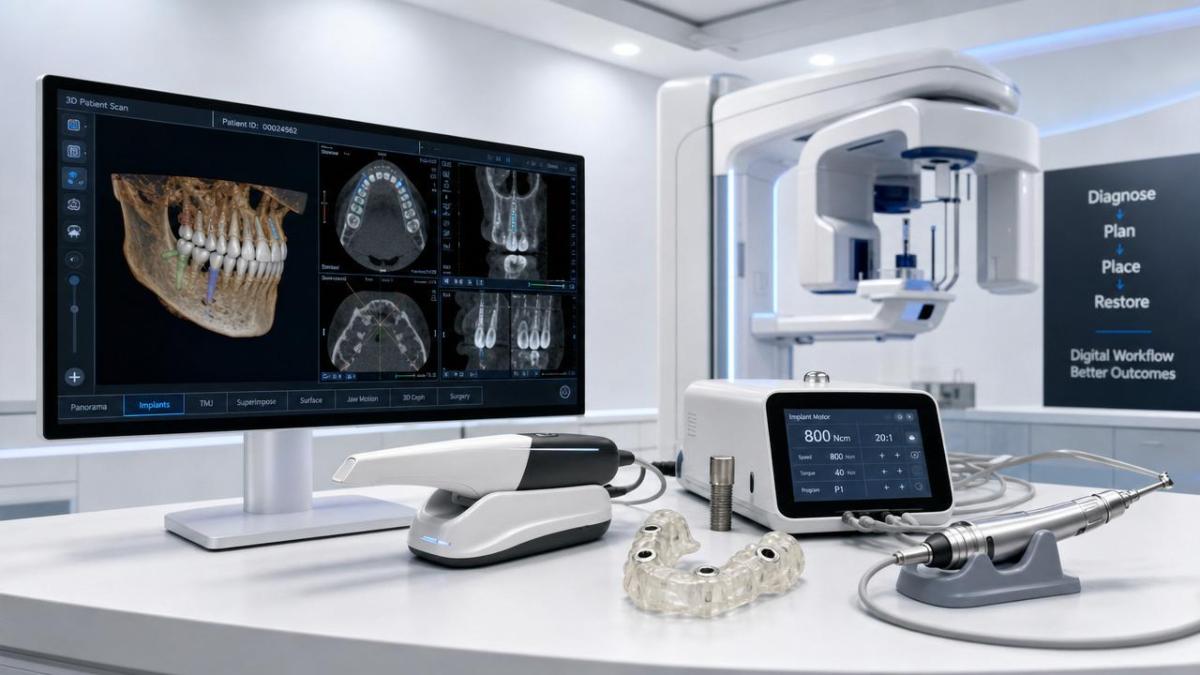
Case accuracy usually starts to drift before drilling begins. Most implant placement errors originate in 3 early stages: imaging, intraoral data capture, and digital planning transfer. If these inputs are unstable, even a high-end implant motor cannot fully correct the downstream deviation.
Technical evaluators should therefore assess dental implant equipment as an integrated system. In most modern workflows, the first 72 hours of diagnosis and planning have more impact on final implant positioning than any single chairside step.
CBCT imaging: the foundation of 3D positional accuracy
Cone beam computed tomography is the primary source of bone, nerve, sinus, and anatomical depth data. For implant planning, evaluators typically compare voxel size, field of view, motion correction, artifact suppression, and software export quality.
Typical voxel sizes range from 0.075 mm to 0.3 mm. Smaller voxel sizes may improve detail visibility, especially in narrow ridges or anterior esthetic zones, but they can also increase noise and file size. In many routine implant cases, a balanced setting in the 0.1 mm to 0.2 mm range is often sufficient for planning accuracy without unnecessary data burden.
What evaluators should check in CBCT systems
- Selectable field of view options for single-unit, quadrant, and full-arch cases
- Metal artifact reduction performance around existing crowns or implants
- DICOM export quality for third-party planning software
- Patient positioning stability to reduce motion blur during 7–20 second scan cycles
- Reconstruction speed for same-visit treatment planning
A scanner with broad FOV flexibility is often more practical than one optimized only for high resolution. For technical assessment, data usability matters more than marketing claims about image sharpness.
Intraoral scanners: reducing impression distortion and alignment errors
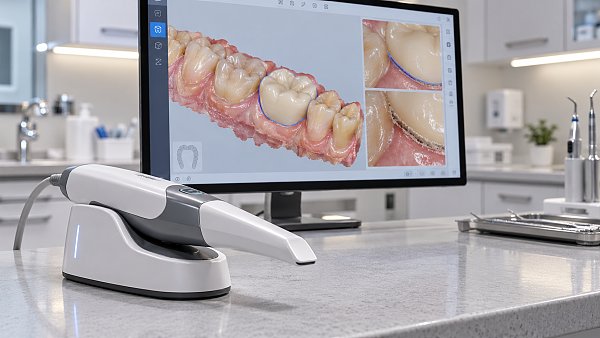
Intraoral scanners improve accuracy by replacing material-based impression variability with digital surface capture. This is especially valuable in full-arch implant restorations, immediate provisionalization, and multi-unit cases where analog distortion can accumulate across longer spans.
Key metrics include scan trueness, precision over full-arch distances, scan body recognition reliability, anti-fog performance, and software ease during rescanning. In practical evaluation, repeatability across 5 to 10 consecutive scans often reveals more than a single demo result.
The table below summarizes how the main upstream imaging and scanning tools influence case accuracy in different implant scenarios.
The key conclusion is that dental implant equipment accuracy begins with reliable data fusion. If CBCT data and surface scans do not register cleanly, later stages inherit the mismatch, often as angular deviation, depth error, or prosthetic misfit.
Planning and guided surgery equipment have the biggest effect on transfer accuracy
Once diagnostic data is captured, the next challenge is transferring the virtual implant position into the patient’s mouth with minimal deviation. This is where planning software, surgical guides, and guide-production quality become decisive.
Across many implant workflows, transfer accuracy is often discussed in terms of coronal deviation, apical deviation, and angular deviation. In guided systems, clinics commonly aim to keep coronal and apical deviations within low single-digit millimeter ranges and angular drift within a few degrees, though actual values depend on support type, sleeve fit, and clinical protocol.
Planning software: where virtual precision is either preserved or lost
Planning software should not be evaluated only on visual appeal. Technical teams should review alignment tools, implant library completeness, prosthetically driven planning functions, nerve mapping support, and export compatibility with printers or milling systems.
A strong platform allows 4 critical controls: cross-sectional measurement, restorative emergence planning, sleeve offset management, and traceable case revision. Without those functions, the software may look modern but still introduce planning ambiguity.
Surgical guides and manufacturing consistency
Guide quality depends on design logic and fabrication repeatability. Even with excellent planning, poor guide seating, sleeve instability, or resin distortion can compromise placement. Evaluators should request data on material shrinkage behavior, printer repeatability, post-curing workflow, and sleeve insertion tolerance.
Support type matters. Tooth-supported guides generally provide the highest seating stability in partially dentate cases. Mucosa-supported guides may require more attention to soft tissue resilience, fixation pin planning, and verification windows. Bone-supported approaches add surgical exposure and handling variables that should be reviewed case by case.
Three practical guide-related risk points
- Insufficient seating verification before drilling
- Mismatch between guided kit components and software sleeve settings
- Material deformation after sterilization or post-processing
For procurement teams, guide accuracy should be verified through an end-to-end workflow test, not only by checking printer specifications on paper.
Implant motors, handpieces, and drilling control improve procedural consistency
After imaging and planning, mechanical control becomes the next determinant of outcome. Implant motors and surgical handpieces do not create anatomical accuracy by themselves, but they strongly affect whether the planned osteotomy is executed at the intended speed, torque, irrigation level, and depth.
This is particularly important in dense cortical bone, immediate extraction sites, and narrow ridges where tactile variation can quickly translate into overpreparation or implant instability.
Implant motor specifications that matter
Technical evaluators should focus on torque accuracy, speed stability, foot control responsiveness, irrigation reliability, and calibration drift over time. Common implant motor operating ranges may span roughly 15 rpm to 2,000 rpm, with torque settings often extending up to 50 Ncm or more depending on the system.
In evaluation, the important issue is not the maximum value alone. The real question is whether the unit maintains stable output under load, especially during sequential drilling and final insertion. A motor that fluctuates under resistance may compromise osteotomy geometry and insertion feel.
Handpiece concentricity and irrigation design
Surgical handpieces should be assessed for runout, bearing stability, sterilization durability, and irrigation path consistency. Even small concentricity issues can amplify drill wobble, especially in longer drills or guided sleeves with limited tolerance.
A practical service benchmark is whether the handpiece remains within expected performance after repeated sterilization cycles, often 100 to 300 cycles in regular clinical use before deeper inspection is recommended by many service teams.
The comparison table below highlights how different execution-stage devices affect consistency during osteotomy preparation and implant insertion.
For technical assessment, mechanical consistency should be measured as repeatability over time. One smooth demonstration is less meaningful than performance stability across months of use, maintenance, and sterilization exposure.
The most effective evaluation framework is system-based, not device-based
A frequent procurement mistake is comparing dental implant equipment by isolated specifications. In reality, case accuracy depends on chain integrity. A high-resolution CBCT paired with weak planning export, or a precise scanner paired with poor guide manufacturing, still produces inconsistent outcomes.
A better framework is to score the workflow in 5 connected stages: imaging, scanning, planning, transfer, and execution. Each stage should be reviewed for data fidelity, mechanical precision, sterilization compatibility, service support, and training burden.
Five evaluation dimensions for procurement teams
- Accuracy: image clarity, registration reliability, guide fit, torque consistency
- Compatibility: DICOM, STL, implant library access, printer or lab workflow integration
- Operational efficiency: scan time, planning time, chairside setup, sterilization turnover
- Serviceability: calibration schedule, spare part availability, response time within 24–72 hours
- Risk control: backup workflow, traceability, validation protocol, staff training complexity
Questions technical evaluators should ask vendors
Ask how frequently calibration is recommended, how guide accuracy is validated, whether open data export is supported, and what happens if software versions change across connected devices. Also review sterilization instructions, especially for handpieces, sleeves, and reusable surgical accessories that pass through CSSD or local instrument reprocessing.
For organizations like MTIC that monitor both therapeutic equipment and infection control, this intersection matters. Accurate implant placement is not only a digital issue; it also depends on clean reprocessing workflows, packaging integrity, and instrument readiness that support predictable surgery session after session.
Common evaluation mistakes that reduce real-world accuracy
- Overvaluing maximum resolution while ignoring registration and export quality
- Testing scanners on short-span cases only, without full-arch repeatability checks
- Approving guided systems without checking drill-key and sleeve tolerance matching
- Ignoring service intervals for motors and handpieces after 6–12 months of use
- Excluding sterilization and reprocessing staff from the evaluation process
These issues are common because dental implant equipment is often purchased by category, while clinical accuracy is produced by the workflow as a whole.
How to choose the right dental implant equipment for different case profiles
Not every clinic or distributor needs the same accuracy architecture. A single-site implant center, a full-arch immediate loading practice, and a hospital department with centralized sterilization will prioritize different equipment combinations.
A practical selection strategy is to match equipment depth to case complexity, monthly volume, and workflow maturity rather than buying every premium device at once.
Recommended matching logic by scenario
For low-to-medium implant volume, the best return often comes from a stable CBCT system, a reliable intraoral scanner, and planning software with straightforward export. For advanced multi-unit and immediate loading workflows, guided surgery production, higher scan repeatability, and strict motor calibration become more important.
In hospital or multi-site environments, standardization may matter more than top-end features. Consistent protocols across 3, 5, or 10 operator teams can produce greater overall accuracy gains than adding isolated premium functions to one site.
A practical 4-step selection path
- Map the current implant workflow and identify where deviation is most frequent
- Shortlist equipment that improves that exact stage rather than the entire catalog
- Run a validation process with at least 3 representative case types
- Review service, reprocessing, and training support before final approval
The dental implant equipment that improves case accuracy most is the equipment that closes the clinic’s biggest gap. In one setting, that may be CBCT registration quality. In another, it may be guide manufacturing repeatability or implant motor calibration stability.
For technical evaluators, the most reliable path is to compare systems by measurable workflow performance, not only by brochure specifications. CBCT imaging, intraoral scanning, planning software, guided surgery tools, implant motors, and reprocessing-compatible accessories all influence final placement precision in different but connected ways.
If you are assessing dental implant equipment for procurement, distribution, or clinical standardization, a structured evaluation can reduce risk, improve consistency, and support stronger long-term restorative outcomes. Contact us to discuss technical comparison criteria, request a tailored equipment assessment framework, or explore more solutions for digital dental workflow and sterile clinical delivery.
Recommended News
 Medical Compliance Reference: U.S. Infection Control Rules vs. GuidanceUse this medical compliance reference to distinguish U.S. infection control rules from guidance, clarify OSHA, CMS, FDA and CDC roles, and identify gaps before your next audit.
 Choosing Powered Exoskeleton Rehabilitation Devices for Post-Stroke Gait TrainingCompare powered exoskeleton rehabilitation devices for post-stroke gait training. Explore patient fit, safety, clinical evidence, and costs to choose the right system for your service.
 Commerce Ministry: Exoskeleton Sales on Key Platforms Rise 46.4% in Jan–Sep 2026Exoskeleton sales rose 46.4% on key platforms in Jan–Sep 2026, according to supplied Commerce Ministry data. Explore procurement insights and key checks for suppliers and buyers.
 Wearable Exoskeleton Rehabilitation Devices: Key Criteria for Gait TrainingCompare wearable exoskeleton rehabilitation devices for gait training. Discover key criteria for patient fit, safety, assistance, and clinical evidence to guide smarter selection.
 3D Intraoral Scans Show High Specificity for Caries Around Restorations3D intraoral scans show high specificity for caries around restorations, but sensitivity varies. Explore what these findings mean for secondary caries assessment.
 Specialty Medical Equipment Specifications: Performance and Compatibility ChecksEvaluate specialty medical equipment specifications with practical performance and compatibility checks. Discover how to avoid costly mismatches and make confident hospital purchasing decisions.
 Taixi Intelligent Exoskeleton Robot Showcased at the 140th Canton FairExplore Taixi Intelligent’s Yinyue X1 exoskeleton, reportedly showcased at the 140th Canton Fair. Discover its features and key compliance checks for overseas buyers.
 Robotic Rehabilitation Devices: How to Evaluate Systems for Gait TrainingCompare robotic rehabilitative medical devices for gait training. Discover how to assess patient fit, safety, clinical evidence, and costs to choose the right system for your program.
 UK Confirms Indefinite Recognition of CE-Marked Medical DevicesCE-marked medical devices gain indefinite recognition in Great Britain. Discover what this means for UKCA requirements, compliance planning and long-term supply continuity.
 Electric Dental Chairs: How to Assess Load Capacity, Positioning, and SafetyChoosing electric dental chair equipment? Learn how to verify load capacity, assess positioning, and check safety controls to make a confident, evidence-based purchase.
 Runyes Opens New Ningbo Plant at Global Partner SummitRunyes opens a new Ningbo plant at its 2026 Global Partner Summit. Explore what the expansion could mean for digital dental equipment, global partners, and procurement planning.
 Medical Think Tank Research for Procurement: Evidence and Bias ChecksMedical think tank procurement research: learn to verify evidence, spot bias, and assess lifecycle costs so you can turn insights into defensible hospital equipment decisions.
 Femtosecond Laser Docking: How to Troubleshoot Repeated Suction LossFemtosecond laser systems with docking: troubleshoot repeated suction loss, identify seal and vacuum issues, and explore key safety checks before another attempt. Read the guide.
 Sterilization Standards: What Documentation Do Hospitals Need for Audits?Strengthen sterilization compliance standards documentation with essential audit records, monitoring evidence, and traceability guidance. Discover how to prepare your hospital for audits.
 Hospital Disinfection System Manufacturers: Efficacy Evidence Buyers Should RequestChoosing a hospital disinfection systems manufacturer? Discover the efficacy reports, safety records, and site trials to request to verify claims and buy with confidence.
 Optical Diffraction Limits Explained: How Wavelength and NA Set ResolutionOptical diffraction limits explained: Learn how wavelength and NA shape resolution, compare optical specifications confidently, and spot misleading claims before choosing imaging equipment.
 Dialysis Center Equipment Checklist: What to Buy Before OpeningExplore end stage renal disease equipment for dialysis centers with an opening checklist for machines, water systems, and supplies. Plan smarter purchases and avoid costly startup delays.
 Dental Clinic Infection Control: Daily Checks for Instruments and SurfacesExplore infection control solutions for dental clinics with practical daily checks for instruments, sterilization, and surfaces. Learn how to spot failures and strengthen patient safety.
 Focused vs. Radial Shockwave Equipment: Clinical Uses and Selection CriteriaExplore this therapeutic equipment comparison of focused vs. radial shockwave systems. Compare clinical uses, targeting, evidence, and costs to choose the right fit for your clinic.
 What Is Driving Demand for Elderly Care Equipment in Home and Facility Settings?Elderly care equipment demand is rising as home care, staff shortages, chronic disease, and safety needs reshape buying decisions. Discover the trends driving smarter care.
 How to Evaluate a Dental Equipment Supplier Before Equipping a New ClinicDental equipment supplier evaluation made simple: compare workflow fit, installation, infection control, digital integration, service support, and total ownership costs before opening your clinic.

Global Trade Insights & Industry
Our mission is to empower global exporters and importers with data-driven insights that foster strategic growth.
Search News
Popular Tags
Industry Overview
The global commercial kitchen equipment market is projected to reach $112 billion by 2027. Driven by urbanization, the rise of e-commerce food delivery, and strict hygiene regulations.