 Get Insights


FDA Tightens Change Control for AI/ML SaMD
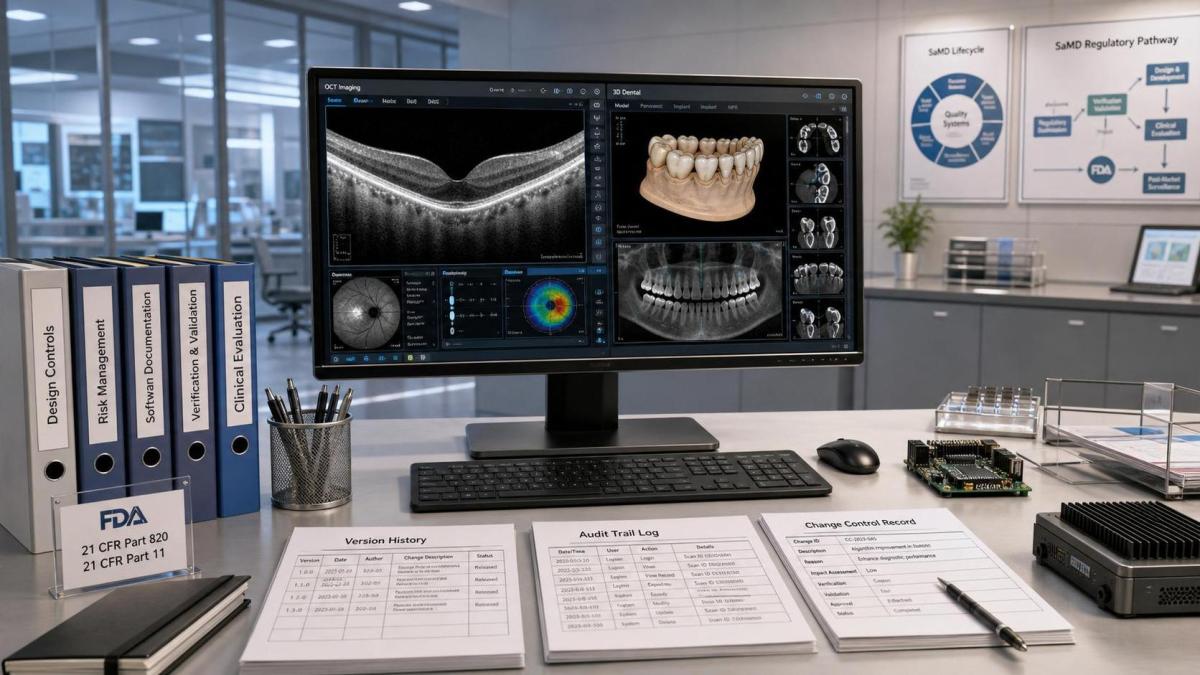
On June 13, 2026, the U.S. FDA released its AI/ML Software as a Medical Device: Change Management Policy, adding a clearer compliance requirement for AI-enabled SaMD products entering the U.S. market. For companies developing products such as OCT image analysis software or digital dental diagnostic AI modules, the update matters not only at the approval stage but also in how model iterations are documented, reviewed, and communicated. What deserves closer attention is that algorithm change control is no longer a peripheral quality topic, but a practical threshold tied to the 510(k) and De Novo pathways.
What the FDA update explicitly requires
According to the provided information, the FDA issued the policy on June 13, 2026 and requires all SaMD products with AI functions to establish an FDA-recognized algorithm change control process. The same information states that a change impact assessment report must be submitted after each model iteration. It also makes clear that Chinese suppliers without such a process will not be able to pass through the 510(k) or De Novo route.
Where the pressure is likely to appear first
For exporters targeting the U.S. clearance route
From an industry perspective, the most direct impact falls on suppliers that sell AI-enabled SaMD into the United States. They may be affected because the new requirement is linked to regulatory access itself, and the pressure is likely to appear in pre-submission preparation, model update governance, and documentation readiness.
For software development and regulatory teams
Analysis shows that the burden will not sit with product teams alone. Development, quality, and regulatory functions are all likely to be involved because every model iteration now connects to a formal impact assessment requirement. The business impact is therefore likely to show up in version control, internal review workflows, and submission support materials.
For downstream buyers and integration partners
Observably, procurement teams, distributors, and integration partners may also need to pay closer attention. If a supplier cannot demonstrate a recognized change control process, questions may emerge around delivery timing, approval progress, and whether the product can continue moving through the intended U.S. regulatory pathway.
What companies should watch now
Whether existing update workflows can support formal change control
Companies should focus on whether current model update practices can be translated into an FDA-recognized control process, rather than treating model iteration as a purely technical upgrade cycle.
How change impact reports will be prepared after each iteration
The practical issue is not only that a report is required, but that each iteration triggers an assessment obligation. Teams involved in algorithm releases, validation, and regulatory filing should therefore pay attention to how that reporting responsibility is assigned and maintained.
Which product lines face the nearest compliance exposure
Products already positioned as AI-enabled SaMD, including the examples referenced in the provided information, deserve priority review. The key distinction is between having AI capability in the product and having a documented process that can support U.S. clearance expectations.
How to communicate with customers and partners
Analysis shows that external communication may become a near-term operational issue. Suppliers, channel partners, and customers may need clearer alignment on approval status, update cycles, and what supporting materials are available when model changes occur.
Why this reads as more than a procedural adjustment
This section is an observation rather than a statement of fact. It is more appropriate to understand this update as a regulatory signal with immediate operational consequences, not merely as a wording change. The reason is that the requirement is tied to algorithm iteration itself, which is central to how AI-enabled medical software evolves after initial development. At the same time, it remains necessary to continue watching how the policy is interpreted and applied in actual submissions.
How this update is best understood at this stage
At this stage, the update is best read as a concrete compliance threshold for AI-enabled SaMD suppliers seeking U.S. market access, especially where ongoing model changes are part of the product lifecycle. It does not by itself answer every implementation question, but it clearly shifts industry attention toward documented change governance, submission discipline, and cross-functional readiness.
Basis of this article
This article is based on the user-provided news title, event date, and event summary. For this type of development, commonly relevant source categories may include official agency releases, company announcements, industry association updates, authoritative media coverage, and standards-related documents. A specific official source link was not provided in the input, so continued verification remains necessary. Areas that still merit follow-up include any later official clarification on implementation details and how the requirement is reflected in real-world 510(k) or De Novo submission practice.
Recommended News
 Choosing Implant Dentistry Systems for Safe, Efficient Oral Surgery WorkflowsImplant dentistry systems for oral surgery: evaluate precision, digital workflows, sterilization, traceability, and supply support to build safer, more efficient surgical care.
 Where Wearable Rehab Technology Delivers Measurable Gains in Stroke RecoveryWearable rehab technology helps stroke programs improve gait, balance, arm use, and home practice with actionable data that guides smarter therapy decisions.
 Hospital Medical Device Technical Evaluation: Safety, Fit, and Lifecycle CriteriaMedical device technical evaluation for hospitals: explore safety, clinical fit, infection control, serviceability, and lifecycle criteria for smarter purchasing decisions.
 Medical Device Product Categories: How Hospitals Classify Equipment for Safer PurchasingMedical device product categories guide safer hospital purchasing. Compare clinical workflows, infrastructure, consumables, infection control, and lifecycle costs.
 Digital Dentistry Equipment Price: Budgeting for Scanners, CAD/CAM, and ROIDigital dentistry equipment price guide: budget for scanners, CAD/CAM, software, service, and total ownership costs. Build a practical ROI case before you buy.
 Which Phacoemulsification Parameters Matter Most for Dense Cataract Cases?Phacoemulsification technology parameters for dense cataracts: compare energy delivery, vacuum, flow, IOP control, and surge response for safer, stable surgery.
 Medical Equipment Specification Standards: A Practical Guide to Compliance ReviewMedical equipment specification standards guide: review compliance, essential performance, clinical fit, utilities, and lifecycle risks for safer procurement decisions.
 How to Evaluate a Digital Dentistry Systems Factory for Clinic Equipment ProjectsEvaluate a digital dentistry systems factory with confidence: compare workflow integration, quality control, documentation, installation, and long-term service costs.
 How to Evaluate an Infection Control Systems Wholesaler for Hospital ProjectsChoose an infection control systems wholesaler with proven compliance, validation support, local service, and transparent lifecycle costs for reliable hospital projects.
 Minimally Invasive Dentistry for Pediatric Care: Techniques and Case SelectionMinimally invasive dentistry for pediatric care: discover case selection, sealants, resin infiltration, and pulp-preserving techniques for healthier young smiles.
 What Is Smart Rehabilitation Equipment? Key Technologies for More Measurable TherapyExplore rehabilitation equipment smart technologies that deliver measurable therapy, adaptive support, and actionable data to improve patient outcomes and clinical decisions.
 How Real-Time Force Feedback Improves Safety in Exoskeleton RehabilitationReal time force feedback improves exoskeleton rehabilitation safety by detecting unstable loading, adapting support, and preventing harmful movement. Learn how it works.
 How to Evaluate Hemodialysis Systems for Hospitals and Clinics in Southeast AsiaHemodialysis systems Southeast Asia: explore key factors for hospitals and clinics, from water treatment and safety to service, consumables, and lifecycle cost.
 Medical Exoskeletons Battery Life: What Determines Runtime in Daily Rehabilitation?Medical exoskeletons battery life depends on patient needs, therapy tasks, and charging workflows. Learn how to assess runtime for safer, more efficient rehabilitation.
 What Is Driving Adoption of Minimally Invasive Dentistry in Middle East Clinics?Explore why minimally invasive dentistry Middle East clinics are adopting digital workflows, precision care, and stronger infection control to improve patient outcomes and growth.
 What Drives Ophthalmic Surgical Device Maintenance Costs Over the Equipment Life Cycle?Ophthalmic surgical devices maintenance cost: uncover life-cycle drivers, uptime risks, contract terms, and smarter budgeting strategies for reliable surgical capacity.
 How to Evaluate a Neuromuscular Stimulation Equipment Supplier for Clinical UseNeuromuscular stimulation equipment supplier guide for clinical teams: assess compliance, usability, consumables, service support, and lifecycle costs.
 How to Select Neurorehabilitation Equipment for Stroke Recovery Programs?Neurorehabilitation equipment selection guide for stroke recovery programs: compare safety, workflow, clinical fit, data, and lifecycle value.
 What Drives Dental CBCT Maintenance Costs Over a Machine’s Service Life?Dental CBCT machines maintenance cost: uncover the service, software, downtime, and support factors that shape lifecycle budgets and smarter purchasing decisions.
 How to Evaluate Infection Control Systems in Southeast Asia for Compliance and Risk ReductionInfection control systems Southeast Asia: learn how to assess compliance, validation, documentation, and workflow risks to reduce audit exposure and improve patient safety.
 How to Evaluate Dental CBCT Systems in Europe for Compliance and Clinic FitDental CBCT systems Europe buyers compare should be judged on compliance, dose control, workflow fit, software integration, and service support. Learn how to choose the right scanner for your clinic.


Global Trade Insights & Industry
Our mission is to empower global exporters and importers with data-driven insights that foster strategic growth.
Search News
Popular Tags
Industry Overview
The global commercial kitchen equipment market is projected to reach $112 billion by 2027. Driven by urbanization, the rise of e-commerce food delivery, and strict hygiene regulations.