 Get Insights


EU Starts Green Tariff Review for Vacuum Autoclaves
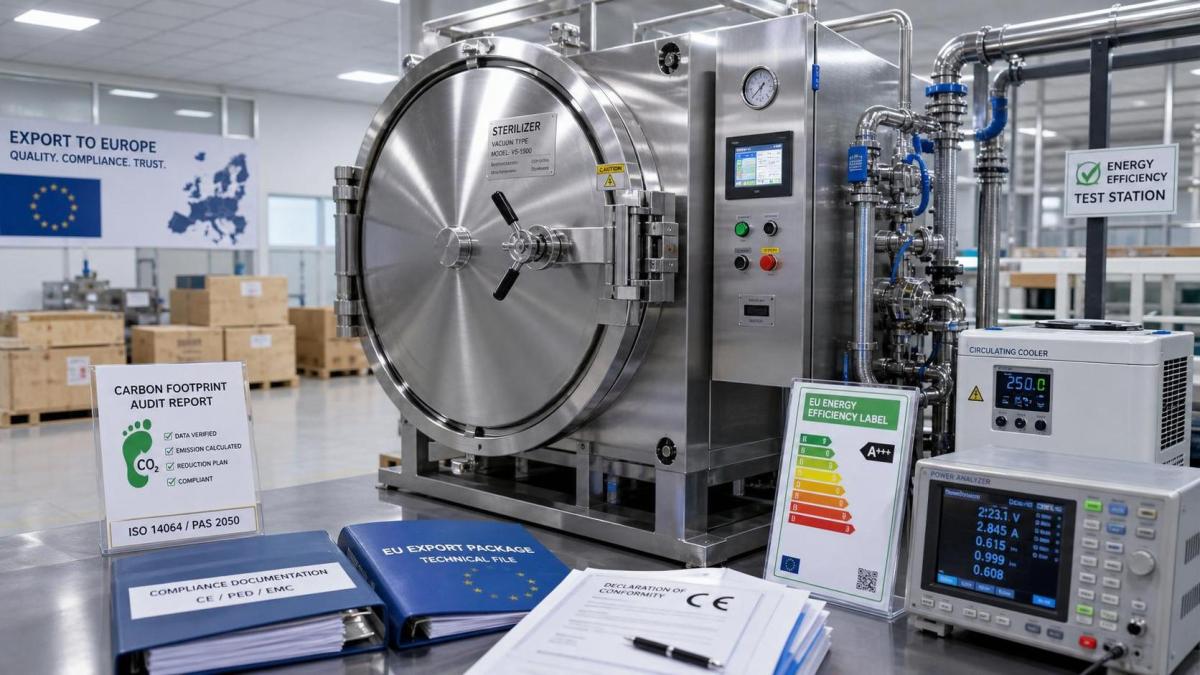
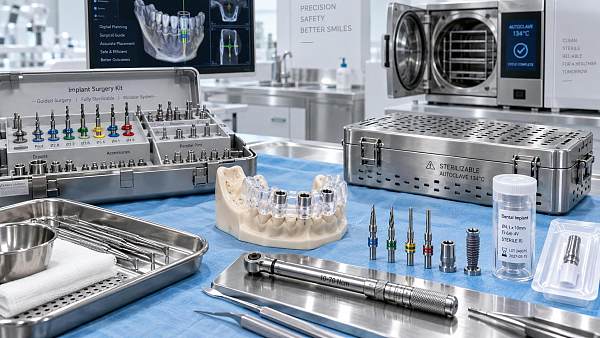
On June 22, 2026, the European Commission opened a carbon-footprint review focused on vacuum autoclaves, putting manufacturers, exporters, importers, procurement teams, and compliance functions on notice. The move matters because it links market access and cost exposure to measurable product performance, with potential added carbon duties proposed for models that do not meet EN 13060:2023+A2:2026 and an initial public list expected before mid-July.
What the Commission Has Put Into Motion
According to the information provided, the European Commission launched a dedicated carbon-footprint assessment for vacuum autoclaves on June 22, 2026. The proposed measure would impose an additional 7.2% carbon tariff on models that do not comply with EN 13060:2023+A2:2026. The assessment is stated to cover life-cycle energy consumption, cooling water circulation efficiency, and vacuum pump energy efficiency ratio. The first batch of the list is scheduled to be published before July 15.
Where the Pressure May Be Felt First
Export and market-entry decisions may face immediate review
From an industry perspective, companies directly trading vacuum autoclaves with the EU may be among the first to feel the impact, because the proposed tariff is tied to whether a model is found non-compliant with the cited standard. The practical effect may show up in quotation strategy, landed-cost calculations, and decisions on which models remain commercially viable for the EU market.
Manufacturing and engineering teams may need closer data alignment
Analysis shows that manufacturers are likely to focus on the assessment scope itself: life-cycle energy use, cooling water circulation efficiency, and vacuum pump energy efficiency ratio. These are not only technical characteristics but also potential compliance evidence points, which means product design, testing, documentation, and model differentiation may come under closer scrutiny.
Procurement and supply-chain coordination could become more time-sensitive
Observably, procurement teams, importers, and supply-chain service providers may need to watch timing as closely as substance. With the first list expected before July 15, purchasing schedules, shipment planning, and customer commitments could be affected by whether a specific model appears on the published list and how its compliance status is interpreted in ongoing transactions.
End users and buyers may place greater weight on documented compliance
For buyers and end-use organizations, the issue is not only possible price exposure but also purchasing certainty. What deserves closer attention is whether suppliers can clearly demonstrate alignment with EN 13060:2023+A2:2026 and respond to questions related to the evaluation criteria already identified in the Commission's review.
What Companies Should Track Now
Watch the first published list and any official wording changes
The near-term priority is to monitor the first batch of published information expected before July 15. Companies should pay attention not only to which models are listed, but also to how the European Commission describes scope, thresholds, and applicability in its official wording.
Separate the policy signal from the practical compliance task
Analysis shows that the announcement is both a policy signal and an operational issue. The policy signal is the use of carbon-footprint review as a trade filter for vacuum autoclaves; the operational task is to determine whether existing models, technical files, and supporting records are sufficient under the stated assessment dimensions.
Prepare product records and supplier-facing documentation
For manufacturers, exporters, and channel partners, current attention should center on product-level materials that may be needed in commercial or compliance communication. This includes organized records related to energy consumption across the life cycle, cooling water circulation performance, and vacuum pump efficiency indicators, as these are the areas specifically named in the assessment summary provided.
Review customer communication and delivery risk scenarios
Observably, businesses with active EU orders may want to review how they communicate with customers about potential tariff exposure, model status, and delivery timing. The key point is not to assume an outcome in advance, but to prepare response paths if a listed model affects pricing, order execution, or substitution planning.
Why This Looks More Like a Directional Signal Than a Final Outcome
As an editorial observation, this development is more appropriately understood as an active policy process rather than a completed market result. The confirmed facts establish that the review has started, that a 7.2% additional carbon tariff is proposed for non-compliant models, and that a first list is due before July 15. What remains open, based on the information provided, is how broad the listed impact will be in practice and how market participants will respond once the first batch is published.
From an industry perspective, the stronger message at this stage is methodological: compliance is being tied to measurable environmental and efficiency criteria within a defined standard framework. That makes the next official disclosures especially important for pricing, certification positioning, and model selection, but it does not yet justify broader conclusions beyond the review process already announced.
How to Read the Development at This Stage
At this point, the news is best read as a near-term compliance and trade watchpoint with possible longer-term significance if the approach is carried forward. The immediate issue is the upcoming publication of the first list and the proposed tariff exposure for models found outside EN 13060:2023+A2:2026. A neutral reading is that the industry now has a concrete signal to monitor, but still needs the next round of official disclosure before treating the impact as fully defined.
Basis of This Article
This article is generated from the user-provided news title, event date, and event summary. For this type of development, commonly relevant source categories may include official announcements, company statements, industry association updates, reports from authoritative media, and documents issued by standards bodies. No specific official source link was provided in the input, so the exact official documentation still requires ongoing verification. The main follow-up point is the first published list expected before July 15 and any further clarification on scope or application released by the relevant authorities.
Recommended News
 Aging Healthcare Demand Forecast: Which Care Segments Will Face Capacity Gaps First?Aging healthcare demand forecast: discover which care segments will face capacity gaps first—from dialysis and rehabilitation to infection control—and how leaders can act early.
 Selecting Vision Correction Equipment for Europe: MDR, CE Evidence, and Service RequirementsVision correction equipment Europe: assess MDR and CE evidence, clinical performance, cybersecurity, site readiness, and service coverage for a safer, auditable selection.
 Medical Device Compliance: A Practical Guide to Core Documentation and StandardsMedical device compliance information: explore core documentation, risk management, validation, standards, and change control for safer, audit-ready devices.
 Dental CBCT Equipment Cost: Budgeting for Purchase, Installation, and OwnershipDental CBCT equipment cost explained: budget for purchase, installation, software, service, compliance, and ownership to build a smarter, lower-risk imaging investment plan.
 How to Build a Global Medical Compliance Reference for Multi-Market Device LaunchesGlobal medical compliance reference: build a traceable, market-ready framework that links requirements, evidence, claims, and lifecycle controls for successful device launches.
 How to Evaluate a Dental Chair Systems Manufacturer for Clinic ProjectsChoose a dental chair systems manufacturer with confidence. Compare ergonomics, infection control, digital compatibility, installation support, and lifecycle value for clinic projects.
 How to Evaluate Interactive Robotic Rehabilitation Systems for Stroke TherapyInteractive robotic rehabilitation systems for stroke therapy: learn how to assess safety, clinical evidence, workflow fit, data, and long-term value.
 Choosing Implant Dentistry Systems for Safe, Efficient Oral Surgery WorkflowsImplant dentistry systems for oral surgery: evaluate precision, digital workflows, sterilization, traceability, and supply support to build safer, more efficient surgical care.
 Where Wearable Rehab Technology Delivers Measurable Gains in Stroke RecoveryWearable rehab technology helps stroke programs improve gait, balance, arm use, and home practice with actionable data that guides smarter therapy decisions.
 Hospital Medical Device Technical Evaluation: Safety, Fit, and Lifecycle CriteriaMedical device technical evaluation for hospitals: explore safety, clinical fit, infection control, serviceability, and lifecycle criteria for smarter purchasing decisions.
 Medical Device Product Categories: How Hospitals Classify Equipment for Safer PurchasingMedical device product categories guide safer hospital purchasing. Compare clinical workflows, infrastructure, consumables, infection control, and lifecycle costs.
 Digital Dentistry Equipment Price: Budgeting for Scanners, CAD/CAM, and ROIDigital dentistry equipment price guide: budget for scanners, CAD/CAM, software, service, and total ownership costs. Build a practical ROI case before you buy.
 Which Phacoemulsification Parameters Matter Most for Dense Cataract Cases?Phacoemulsification technology parameters for dense cataracts: compare energy delivery, vacuum, flow, IOP control, and surge response for safer, stable surgery.
 Medical Equipment Specification Standards: A Practical Guide to Compliance ReviewMedical equipment specification standards guide: review compliance, essential performance, clinical fit, utilities, and lifecycle risks for safer procurement decisions.
 How to Evaluate a Digital Dentistry Systems Factory for Clinic Equipment ProjectsEvaluate a digital dentistry systems factory with confidence: compare workflow integration, quality control, documentation, installation, and long-term service costs.
 How to Evaluate an Infection Control Systems Wholesaler for Hospital ProjectsChoose an infection control systems wholesaler with proven compliance, validation support, local service, and transparent lifecycle costs for reliable hospital projects.
 Minimally Invasive Dentistry for Pediatric Care: Techniques and Case SelectionMinimally invasive dentistry for pediatric care: discover case selection, sealants, resin infiltration, and pulp-preserving techniques for healthier young smiles.
 What Is Smart Rehabilitation Equipment? Key Technologies for More Measurable TherapyExplore rehabilitation equipment smart technologies that deliver measurable therapy, adaptive support, and actionable data to improve patient outcomes and clinical decisions.
 How Real-Time Force Feedback Improves Safety in Exoskeleton RehabilitationReal time force feedback improves exoskeleton rehabilitation safety by detecting unstable loading, adapting support, and preventing harmful movement. Learn how it works.
 How to Evaluate Hemodialysis Systems for Hospitals and Clinics in Southeast AsiaHemodialysis systems Southeast Asia: explore key factors for hospitals and clinics, from water treatment and safety to service, consumables, and lifecycle cost.
 Medical Exoskeletons Battery Life: What Determines Runtime in Daily Rehabilitation?Medical exoskeletons battery life depends on patient needs, therapy tasks, and charging workflows. Learn how to assess runtime for safer, more efficient rehabilitation.





Global Trade Insights & Industry
Our mission is to empower global exporters and importers with data-driven insights that foster strategic growth.
Search News
Popular Tags
Industry Overview
The global commercial kitchen equipment market is projected to reach $112 billion by 2027. Driven by urbanization, the rise of e-commerce food delivery, and strict hygiene regulations.