 Get Insights


High-Flux Dialyzer Prices Rise 12% in Q2
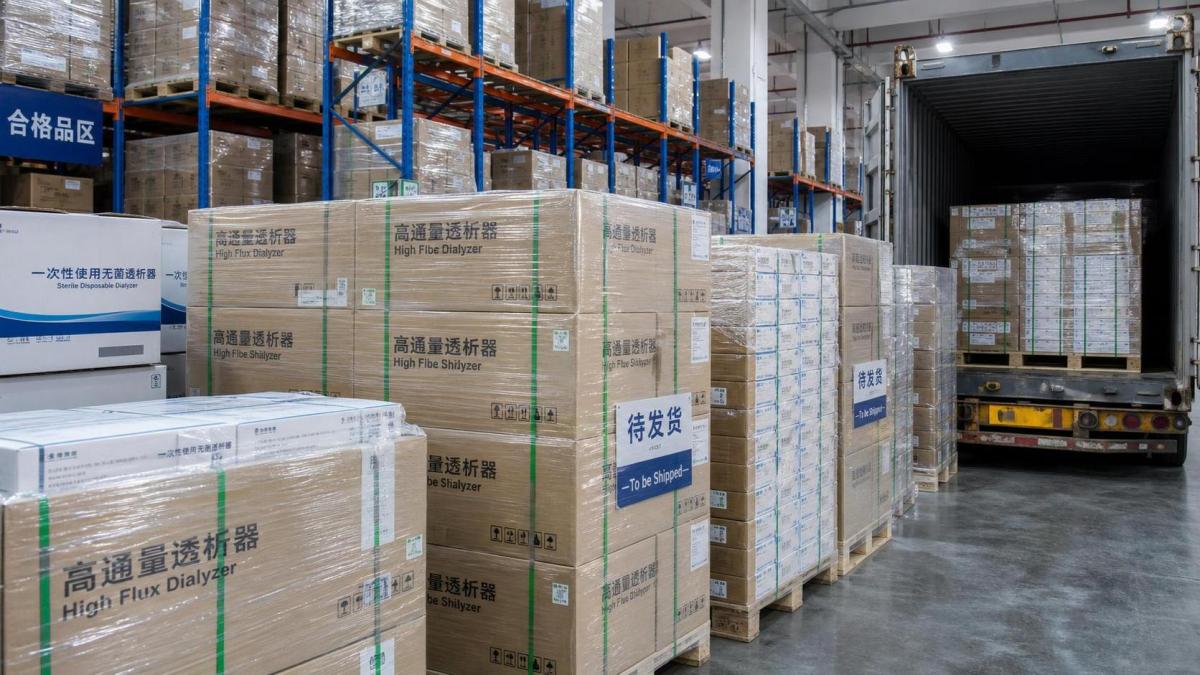
The timing of the underlying market shift is not explicitly stated in the available information, but a quarterly report released by the International Medical Product Monitoring Network (IMPMN) on June 18, 2026, shows that global average prices for High-flux Dialyzers rose 12% quarter on quarter. At the same time, major exporters in China reported that average lead times for new orders have extended from 9 weeks to 14 weeks, with some high-end models already scheduled as far out as October 2026. For manufacturers, exporters, procurement teams, and supply chain service providers, this is worth close attention because it combines price pressure with delivery uncertainty in the same product segment.
What the latest report confirms
According to the IMPMN quarterly report issued on June 18, 2026, the global average price of High-flux Dialyzers increased by 12% compared with the previous quarter.
The report attributes this change to tight global supply of polysulfone membrane base materials and concentrated hospital tendering activity in Europe and the United States.
Major Chinese export manufacturers also stated that dependence on imported key filter membranes exceeds 65%. Against that backdrop, and with ocean freight capacity remaining tight, the average delivery cycle for newly accepted orders has lengthened from 9 weeks to 14 weeks.
For some high-end models, current scheduling has extended to October 2026.
Where the pressure is likely to appear first
Export-facing manufacturers are dealing with both cost and scheduling strain
From an industry perspective, manufacturers that rely on imported key membrane materials may feel the impact first in procurement planning, production scheduling, and quotation management. The combination of higher input pressure and longer lead times can make order acceptance and delivery commitments more difficult to manage.
Procurement teams may face a narrower operating window
For buyers and sourcing teams, the reported change matters not only because prices have moved higher, but because delivery cycles have also stretched. That means procurement timing, model selection, and contract execution may require closer alignment with actual supply availability.
Logistics and supply chain service providers may see more coordination risk
Observably, tight shipping capacity adds another layer of operational uncertainty. For freight and supply chain partners, the pressure is likely to center on booking stability, shipment planning, and communication around revised delivery expectations.
Distributors and channel operators may need closer inventory visibility
For channel participants, longer replenishment cycles can increase the need to track order status and allocation more closely, especially where high-end product lines are already being scheduled several months ahead.
What companies should watch now
Lead-time commitments need tighter customer communication
What deserves closer attention is whether quoted delivery windows still match real production and shipping conditions. Where average lead times have moved from 9 to 14 weeks, customer communication and contract timing become more sensitive.
Dependence on imported membrane inputs remains a practical issue
Analysis shows that the reported import dependence of more than 65% for key filter membranes is not just a sourcing detail. It is directly relevant to procurement continuity, production planning, and exposure to upstream supply disruptions.
High-end model scheduling may require earlier order decisions
With some higher-end models already scheduled to October 2026, companies involved in sales, order management, and procurement should pay close attention to model-specific availability rather than treating the category as uniformly supplied.
Follow-up verification should focus on official updates and execution details
Because the currently available information is limited to the provided report summary and manufacturer feedback, companies should continue checking whether subsequent official statements, tender developments, or supplier notices change the practical delivery outlook.
Why this looks more like a supply signal than a one-point price move
As an editorial observation, this development appears more meaningful as a combined supply-chain signal than as a standalone price fluctuation. The reported 12% quarter-on-quarter rise matters, but the extension of lead times and the scheduling delay for certain high-end models suggest that availability and fulfillment conditions deserve equal attention.
It is more appropriate to understand this as a market condition that still requires observation rather than a fully settled long-term trend. The current facts point to pressure in materials, tender-driven demand concentration, and logistics, but they do not by themselves confirm how long these conditions will persist.
How the market may best read this update
At this stage, the report should be read as a clear sign of near-term strain in High-flux Dialyzers pricing and delivery, especially for businesses linked to export orders, procurement cycles, and supply coordination. A neutral reading is more appropriate than a dramatic one: the available information confirms tighter conditions, but the scale and duration of the impact still need continued monitoring.
Basis of this article and what still needs checking
This article is based on the user-provided news title, the note that the event timing was not explicitly stated, and the provided event summary describing the IMPMN quarterly report issued on June 18, 2026, as well as feedback from major Chinese export manufacturers.
For this type of industry update, relevant source categories typically include official announcements, company statements, industry association releases, authoritative media coverage, and standards-related documents. A specific official source link was not provided in the input, so further verification is still needed.
Areas for continued follow-up include whether pricing pressure persists beyond the reported quarter, whether delivery cycles improve or deteriorate further, and whether additional official disclosures clarify the supply and tender situation affecting High-flux Dialyzers.
Recommended News
 Dental CBCT Equipment Cost: Budgeting for Purchase, Installation, and OwnershipDental CBCT equipment cost explained: budget for purchase, installation, software, service, compliance, and ownership to build a smarter, lower-risk imaging investment plan.
 How to Build a Global Medical Compliance Reference for Multi-Market Device LaunchesGlobal medical compliance reference: build a traceable, market-ready framework that links requirements, evidence, claims, and lifecycle controls for successful device launches.
 How to Evaluate a Dental Chair Systems Manufacturer for Clinic ProjectsChoose a dental chair systems manufacturer with confidence. Compare ergonomics, infection control, digital compatibility, installation support, and lifecycle value for clinic projects.
 How to Evaluate Interactive Robotic Rehabilitation Systems for Stroke TherapyInteractive robotic rehabilitation systems for stroke therapy: learn how to assess safety, clinical evidence, workflow fit, data, and long-term value.
 Choosing Implant Dentistry Systems for Safe, Efficient Oral Surgery WorkflowsImplant dentistry systems for oral surgery: evaluate precision, digital workflows, sterilization, traceability, and supply support to build safer, more efficient surgical care.
 Where Wearable Rehab Technology Delivers Measurable Gains in Stroke RecoveryWearable rehab technology helps stroke programs improve gait, balance, arm use, and home practice with actionable data that guides smarter therapy decisions.
 Hospital Medical Device Technical Evaluation: Safety, Fit, and Lifecycle CriteriaMedical device technical evaluation for hospitals: explore safety, clinical fit, infection control, serviceability, and lifecycle criteria for smarter purchasing decisions.
 Medical Device Product Categories: How Hospitals Classify Equipment for Safer PurchasingMedical device product categories guide safer hospital purchasing. Compare clinical workflows, infrastructure, consumables, infection control, and lifecycle costs.
 Digital Dentistry Equipment Price: Budgeting for Scanners, CAD/CAM, and ROIDigital dentistry equipment price guide: budget for scanners, CAD/CAM, software, service, and total ownership costs. Build a practical ROI case before you buy.
 Which Phacoemulsification Parameters Matter Most for Dense Cataract Cases?Phacoemulsification technology parameters for dense cataracts: compare energy delivery, vacuum, flow, IOP control, and surge response for safer, stable surgery.
 Medical Equipment Specification Standards: A Practical Guide to Compliance ReviewMedical equipment specification standards guide: review compliance, essential performance, clinical fit, utilities, and lifecycle risks for safer procurement decisions.
 How to Evaluate a Digital Dentistry Systems Factory for Clinic Equipment ProjectsEvaluate a digital dentistry systems factory with confidence: compare workflow integration, quality control, documentation, installation, and long-term service costs.
 How to Evaluate an Infection Control Systems Wholesaler for Hospital ProjectsChoose an infection control systems wholesaler with proven compliance, validation support, local service, and transparent lifecycle costs for reliable hospital projects.
 Minimally Invasive Dentistry for Pediatric Care: Techniques and Case SelectionMinimally invasive dentistry for pediatric care: discover case selection, sealants, resin infiltration, and pulp-preserving techniques for healthier young smiles.
 What Is Smart Rehabilitation Equipment? Key Technologies for More Measurable TherapyExplore rehabilitation equipment smart technologies that deliver measurable therapy, adaptive support, and actionable data to improve patient outcomes and clinical decisions.
 How Real-Time Force Feedback Improves Safety in Exoskeleton RehabilitationReal time force feedback improves exoskeleton rehabilitation safety by detecting unstable loading, adapting support, and preventing harmful movement. Learn how it works.
 How to Evaluate Hemodialysis Systems for Hospitals and Clinics in Southeast AsiaHemodialysis systems Southeast Asia: explore key factors for hospitals and clinics, from water treatment and safety to service, consumables, and lifecycle cost.
 Medical Exoskeletons Battery Life: What Determines Runtime in Daily Rehabilitation?Medical exoskeletons battery life depends on patient needs, therapy tasks, and charging workflows. Learn how to assess runtime for safer, more efficient rehabilitation.
 What Is Driving Adoption of Minimally Invasive Dentistry in Middle East Clinics?Explore why minimally invasive dentistry Middle East clinics are adopting digital workflows, precision care, and stronger infection control to improve patient outcomes and growth.
 What Drives Ophthalmic Surgical Device Maintenance Costs Over the Equipment Life Cycle?Ophthalmic surgical devices maintenance cost: uncover life-cycle drivers, uptime risks, contract terms, and smarter budgeting strategies for reliable surgical capacity.
 How to Evaluate a Neuromuscular Stimulation Equipment Supplier for Clinical UseNeuromuscular stimulation equipment supplier guide for clinical teams: assess compliance, usability, consumables, service support, and lifecycle costs.



Global Trade Insights & Industry
Our mission is to empower global exporters and importers with data-driven insights that foster strategic growth.
Search News
Popular Tags
Industry Overview
The global commercial kitchen equipment market is projected to reach $112 billion by 2027. Driven by urbanization, the rise of e-commerce food delivery, and strict hygiene regulations.