 Get Insights


Ophthalmic Diagnostic Devices: OCT, Fundus Imaging, and Biometry Compared
Selecting the right ophthalmic diagnostic devices is no longer only a clinical decision.
It affects workflow efficiency, patient throughput, diagnostic confidence, and long-term return on investment.
When OCT, fundus imaging, and biometry systems are compared, the best choice depends on real examination scenarios.
Modern ophthalmic diagnostic devices must support faster decisions, cleaner data, and scalable eye-care operations.
Scenario Background: Why Ophthalmic Diagnostic Devices Must Be Compared by Use Case
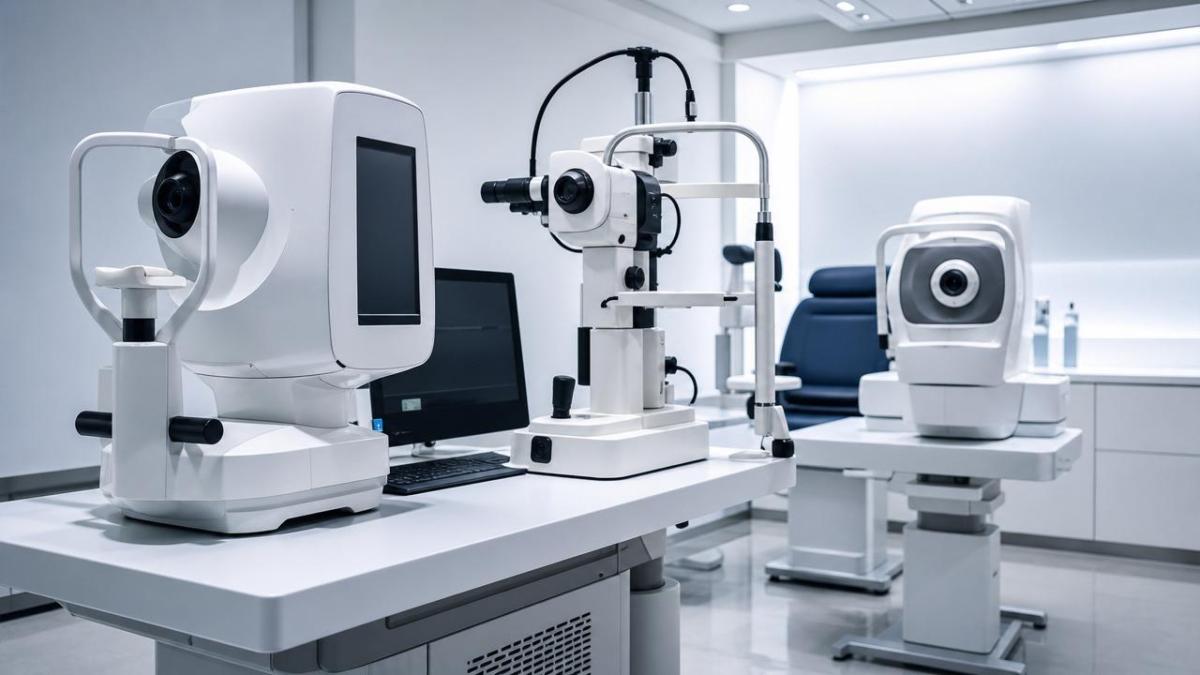
OCT, fundus cameras, and optical biometers answer different clinical questions.
A single device rarely covers every imaging, measurement, and documentation requirement.
OCT reveals retinal and anterior segment microstructure with cross-sectional detail.
Fundus imaging documents the retina, optic disc, vessels, and lesions in wide visual context.
Biometry measures axial length, keratometry, anterior chamber depth, and lens-related parameters.
Therefore, ophthalmic diagnostic devices should be selected around disease mix, examination volume, and data integration needs.
For MTIC, this is a high-impact equipment intelligence topic.
Ophthalmic optical equipment sits within the broader ecosystem of fine-treatment devices and precision hospital infrastructure.
The central issue is not which technology is “best.”
The stronger question is which scenario creates the highest clinical and operational value.
Macular and Retinal Disease Scenarios: When OCT Delivers the Highest Value
OCT is often the priority among ophthalmic diagnostic devices for macular disease evaluation.
It visualizes retinal layers, fluid, edema, drusen, membranes, and structural change.
In diabetic macular edema, OCT supports thickness measurement and treatment monitoring.
In age-related macular degeneration, it helps detect subretinal fluid and pigment epithelial detachment.
For glaucoma, OCT evaluates retinal nerve fiber layer and ganglion cell complex.
The key purchasing judgment is scan speed, segmentation accuracy, image depth, and repeatability.
Spectral-domain OCT remains common for high-resolution retinal imaging.
Swept-source OCT may offer deeper penetration and wider scan patterns.
OCT angiography adds non-invasive microvascular mapping, useful when dye-based imaging is impractical.
However, OCT is not a complete replacement for fundus imaging.
It provides structural slices, while color photography gives broader retinal documentation.
For retinal clinics, ophthalmic diagnostic devices should include both depth-focused and overview-focused imaging capacity.
Screening and Documentation Scenarios: When Fundus Imaging Is More Efficient
Fundus imaging is highly valuable when the scenario requires fast documentation across many patients.
Color fundus cameras capture optic disc status, vessel patterns, hemorrhage, exudates, and peripheral abnormalities.
Non-mydriatic fundus imaging improves throughput in routine screening settings.
Widefield systems are useful for diabetic retinopathy, retinal tears, and peripheral lesion review.
Compared with OCT, fundus imaging is easier for longitudinal visual comparison.
Images can be reviewed quickly, stored efficiently, and shared for teleophthalmology.
Among ophthalmic diagnostic devices, fundus cameras often provide the strongest first-line screening economics.
The important judgment points are field of view, image quality, autofocus, pupil tolerance, and color consistency.
Portable fundus cameras can extend screening beyond fixed examination rooms.
Yet portability may involve compromises in field size, stability, and operator dependency.
Fundus imaging is ideal when the goal is detection, triage, and photographic evidence.
It becomes less sufficient when sub-surface retinal pathology needs detailed layer analysis.
Cataract and Refractive Surgery Scenarios: When Biometry Becomes Essential
Biometry is indispensable when ophthalmic diagnostic devices support cataract surgery planning.
Its core value is accurate intraocular lens power calculation.
Modern optical biometers measure axial length, corneal curvature, white-to-white distance, and anterior chamber depth.
Some platforms also assess lens thickness, posterior corneal curvature, and total keratometry.
In high-volume cataract pathways, repeatability and formula compatibility matter more than decorative features.
The strongest systems reduce refractive surprises after surgery.
Biometry is also important in refractive lens exchange and premium IOL planning.
When toric or multifocal lenses are used, measurement precision becomes a financial and satisfaction issue.
Compared with OCT and fundus imaging, biometry is more surgical-planning oriented.
It does not primarily diagnose retinal disease or document diabetic lesions.
For surgery-centered operations, ophthalmic diagnostic devices should prioritize biometry integration with IOL calculators and surgical records.
Different Scenario Needs: OCT, Fundus Imaging, and Biometry Compared
The most practical comparison starts with the clinical question each device answers.
The table below summarizes how ophthalmic diagnostic devices differ across common scenarios.
This comparison shows why device overlap should not be confused with device redundancy.
Each platform supports different decision points in the patient journey.
A balanced mix of ophthalmic diagnostic devices can reduce referrals, repeat visits, and uncertain findings.
Scenario Adaptation Advice: Building a Future-ready Device Portfolio
A practical portfolio should start with service volume and disease distribution.
Retina-focused environments benefit from OCT first, then widefield or high-quality fundus imaging.
Cataract-heavy environments should secure accurate biometry before expanding advanced imaging options.
General eye-care settings may need fundus imaging as the documentation backbone.
- Choose OCT when structural depth determines diagnosis or treatment follow-up.
- Choose fundus imaging when screening, triage, and image sharing dominate daily workflow.
- Choose biometry when surgical planning accuracy drives outcomes and revenue stability.
- Combine ophthalmic diagnostic devices when one examination pathway needs both detection and measurement.
Software integration deserves equal attention.
DICOM compatibility, EMR connectivity, report customization, and cloud review can improve equipment utilization.
Artificial intelligence may support lesion detection, image grading, and quality control.
Still, AI should assist decisions rather than replace clinical verification.
The strongest ophthalmic diagnostic devices combine optical performance with reliable workflow design.
Common Scenario Misjudgments That Reduce Equipment Value
One common mistake is buying the most advanced specification without matching local examination demand.
High-end OCT may be underused if retinal case volume is limited.
Another mistake is treating fundus imaging as enough for all retinal decisions.
Macular fluid, subtle traction, and layer disruption often require OCT confirmation.
Biometry is sometimes evaluated only by purchase price.
That approach ignores refractive accuracy, patient satisfaction, and postoperative correction costs.
Maintenance planning is also frequently underestimated.
Calibration, service response, software upgrades, and consumable dependencies affect total ownership cost.
Training time should be included in every comparison of ophthalmic diagnostic devices.
A device that requires fewer retakes may outperform a technically superior but complex platform.
The best equipment decision balances image quality, operator consistency, data usability, and long-term scalability.
Action Guide: Turning Device Comparison into a Smarter Acquisition Plan
Start by mapping the top five examination scenarios by monthly volume.
Then define which clinical decisions require OCT, fundus imaging, biometry, or combined data.
Request sample reports, raw images, workflow demonstrations, and service documentation before final evaluation.
Compare ophthalmic diagnostic devices using repeatability, integration, training burden, and service reliability.
Do not evaluate equipment only by resolution, speed, or brand recognition.
The right system must improve decisions in the scenarios that occur every day.
MTIC’s intelligence approach links optical engineering, clinical ergonomics, and capital efficiency.
That perspective helps identify ophthalmic diagnostic devices that support precision, throughput, and future expansion.
For retinal care, screening programs, and cataract pathways, the winning choice is scenario-fit technology.
Build the portfolio around real decisions, not isolated specifications.
That is how ophthalmic diagnostic devices become long-term assets for high-quality vision care.
Recommended News
 Medical Compliance Reference: U.S. Infection Control Rules vs. GuidanceUse this medical compliance reference to distinguish U.S. infection control rules from guidance, clarify OSHA, CMS, FDA and CDC roles, and identify gaps before your next audit.
 Choosing Powered Exoskeleton Rehabilitation Devices for Post-Stroke Gait TrainingCompare powered exoskeleton rehabilitation devices for post-stroke gait training. Explore patient fit, safety, clinical evidence, and costs to choose the right system for your service.
 Commerce Ministry: Exoskeleton Sales on Key Platforms Rise 46.4% in Jan–Sep 2026Exoskeleton sales rose 46.4% on key platforms in Jan–Sep 2026, according to supplied Commerce Ministry data. Explore procurement insights and key checks for suppliers and buyers.
 Wearable Exoskeleton Rehabilitation Devices: Key Criteria for Gait TrainingCompare wearable exoskeleton rehabilitation devices for gait training. Discover key criteria for patient fit, safety, assistance, and clinical evidence to guide smarter selection.
 3D Intraoral Scans Show High Specificity for Caries Around Restorations3D intraoral scans show high specificity for caries around restorations, but sensitivity varies. Explore what these findings mean for secondary caries assessment.
 Specialty Medical Equipment Specifications: Performance and Compatibility ChecksEvaluate specialty medical equipment specifications with practical performance and compatibility checks. Discover how to avoid costly mismatches and make confident hospital purchasing decisions.
 Taixi Intelligent Exoskeleton Robot Showcased at the 140th Canton FairExplore Taixi Intelligent’s Yinyue X1 exoskeleton, reportedly showcased at the 140th Canton Fair. Discover its features and key compliance checks for overseas buyers.
 Robotic Rehabilitation Devices: How to Evaluate Systems for Gait TrainingCompare robotic rehabilitative medical devices for gait training. Discover how to assess patient fit, safety, clinical evidence, and costs to choose the right system for your program.
 UK Confirms Indefinite Recognition of CE-Marked Medical DevicesCE-marked medical devices gain indefinite recognition in Great Britain. Discover what this means for UKCA requirements, compliance planning and long-term supply continuity.
 Electric Dental Chairs: How to Assess Load Capacity, Positioning, and SafetyChoosing electric dental chair equipment? Learn how to verify load capacity, assess positioning, and check safety controls to make a confident, evidence-based purchase.
 Runyes Opens New Ningbo Plant at Global Partner SummitRunyes opens a new Ningbo plant at its 2026 Global Partner Summit. Explore what the expansion could mean for digital dental equipment, global partners, and procurement planning.
 Medical Think Tank Research for Procurement: Evidence and Bias ChecksMedical think tank procurement research: learn to verify evidence, spot bias, and assess lifecycle costs so you can turn insights into defensible hospital equipment decisions.
 Femtosecond Laser Docking: How to Troubleshoot Repeated Suction LossFemtosecond laser systems with docking: troubleshoot repeated suction loss, identify seal and vacuum issues, and explore key safety checks before another attempt. Read the guide.
 Sterilization Standards: What Documentation Do Hospitals Need for Audits?Strengthen sterilization compliance standards documentation with essential audit records, monitoring evidence, and traceability guidance. Discover how to prepare your hospital for audits.
 Hospital Disinfection System Manufacturers: Efficacy Evidence Buyers Should RequestChoosing a hospital disinfection systems manufacturer? Discover the efficacy reports, safety records, and site trials to request to verify claims and buy with confidence.
 Optical Diffraction Limits Explained: How Wavelength and NA Set ResolutionOptical diffraction limits explained: Learn how wavelength and NA shape resolution, compare optical specifications confidently, and spot misleading claims before choosing imaging equipment.
 Dialysis Center Equipment Checklist: What to Buy Before OpeningExplore end stage renal disease equipment for dialysis centers with an opening checklist for machines, water systems, and supplies. Plan smarter purchases and avoid costly startup delays.
 Dental Clinic Infection Control: Daily Checks for Instruments and SurfacesExplore infection control solutions for dental clinics with practical daily checks for instruments, sterilization, and surfaces. Learn how to spot failures and strengthen patient safety.
 Focused vs. Radial Shockwave Equipment: Clinical Uses and Selection CriteriaExplore this therapeutic equipment comparison of focused vs. radial shockwave systems. Compare clinical uses, targeting, evidence, and costs to choose the right fit for your clinic.
 What Is Driving Demand for Elderly Care Equipment in Home and Facility Settings?Elderly care equipment demand is rising as home care, staff shortages, chronic disease, and safety needs reshape buying decisions. Discover the trends driving smarter care.
 How to Evaluate a Dental Equipment Supplier Before Equipping a New ClinicDental equipment supplier evaluation made simple: compare workflow fit, installation, infection control, digital integration, service support, and total ownership costs before opening your clinic.







Global Trade Insights & Industry
Our mission is to empower global exporters and importers with data-driven insights that foster strategic growth.
Search News
Popular Tags
Industry Overview
The global commercial kitchen equipment market is projected to reach $112 billion by 2027. Driven by urbanization, the rise of e-commerce food delivery, and strict hygiene regulations.