 Get Insights


Langfang Fair Draws 700+ Overseas Medical Buyers
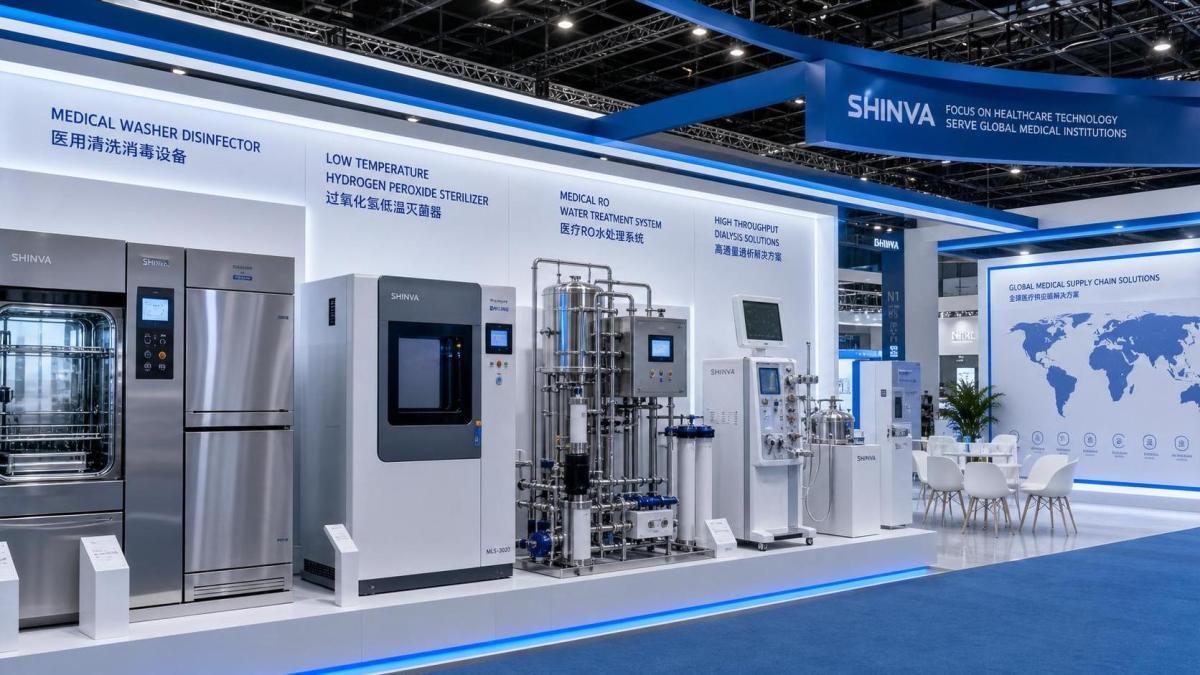
On June 16, 2026, Hebei’s commerce authority announced that the healthcare session of the 21st China Langfang International Economic and Trade Fair, scheduled for June 26–28, had already secured 712 overseas buyers from 32 countries including Germany, Saudi Arabia, Brazil, Indonesia, and Mexico. For medical device exporters, infection control equipment suppliers, water treatment system providers, dialysis-related manufacturers, and hospital-facing distributors, this matters because the buyer mix points directly to procurement and operational demand rather than broad promotional interest.
A buyer roster centered on purchasing authority
According to the provided event information, the medical and health session of the fair has locked in 712 overseas buyers ahead of the June 26–28 event dates. These buyers come from 32 countries, with examples including Germany, Saudi Arabia, Brazil, Indonesia, and Mexico.
The composition of attendees is also notable in confirmed terms: 68% are hospital procurement directors, CSSD heads, and supply chain leaders from distribution groups. The demand focus named in the event summary covers Washer-Disinfectors, H2O2 Plasma Sterilizers, Medical RO Water Systems, and High-flux Dialyzers.
Where the immediate business relevance may appear
Hospital equipment suppliers may see more specification-driven conversations
From an industry perspective, suppliers of sterilization and decontamination equipment may be most directly affected because the highlighted demand categories are closely tied to hospital operational workflows. The potential impact is likely to show up in product specification discussions, application matching, and early-stage procurement communication rather than in any confirmed order outcome at this stage.
Distribution and channel partners should watch buyer-role concentration
Analysis shows that the high share of procurement directors, CSSD managers, and distribution-group supply chain leaders could shift attention toward distribution capability, after-sales coordination, and purchasing process alignment. For channel businesses, what deserves closer attention is not only product interest, but also whether supplier communication is adapted to institutional buyers with defined procurement responsibilities.
Water and dialysis-related manufacturers may face more focused screening
Medical RO Water Systems and High-flux Dialyzers being listed as key demand categories suggests that companies in these segments may encounter targeted buyer screening around applicable product fit and delivery readiness. Observably, the relevance here is strongest for businesses already serving clinical or hospital procurement pathways.
What companies should prepare for next
Track any updated official wording after the matchmaking phase
Companies should pay close attention to how official communications evolve during and after the June 26–28 event window. Analysis shows that there is a practical difference between a confirmed buyer roster and confirmed transaction results, so follow-up statements may matter more than the headline count alone.
Match materials to the named demand categories
Suppliers in Washer-Disinfectors, H2O2 Plasma Sterilizers, Medical RO Water Systems, and High-flux Dialyzers should review whether their product documentation, category positioning, and buyer-facing communication clearly align with the demand areas explicitly identified in the event summary.
Prepare for institution-led procurement dialogue
Because a large share of participants are described as hospital procurement directors, CSSD heads, and supply chain leaders, companies should be ready for discussions that are likely to be practical and procurement-oriented. What deserves closer attention is whether internal sales, technical, and documentation teams can respond consistently to buyer questions within those functions.
Separate market signal from concluded business
Observably, the current information signals concentrated interest, but it does not by itself confirm deal volume, project conversion, or long-term market share shifts. Businesses should therefore treat this as a meaningful lead indicator while continuing to verify actual follow-up progress.
Why this is better read as a market signal than a result
Analysis shows that the strongest message in this update is the combination of buyer scale, cross-country coverage, and role concentration in hospital procurement and infection control-related functions. That combination suggests organized overseas attention around a narrow set of medical equipment categories. At the same time, it is more appropriate to understand this as a stage in buyer-seller matching rather than as proof of completed transactions or durable demand expansion.
From an industry perspective, the event is worth watching because it may indicate where current procurement conversations are concentrating: sterilization, disinfection, medical water systems, and dialysis consumable-related demand. However, further confirmation is still needed on conversion outcomes, repeat purchasing, and post-event execution.
What the update means for the sector now
In practical terms, this development points to focused international procurement attention on several hospital-oriented product categories at the 2026 Langfang fair. The industry significance lies less in a broad trade narrative and more in the buyer profile: decision-makers tied to procurement, CSSD, and supply chain functions are already present in meaningful numbers.
A neutral reading is that this is a credible short-term demand signal with possible longer-term implications, but not yet a definitive market outcome. For companies across equipment manufacturing, distribution, and supply support, the more useful approach is to read it as a near-term business indicator that still requires continued observation.
Basis of this article and points to verify later
This article is generated solely from the user-provided news title, event date, and event summary. The specific official source link was not provided in the input, so continued verification is still needed.
For this type of industry update, commonly relevant source categories may include official government announcements, company disclosures, industry association updates, authoritative media reporting, and standards-related documents. The main follow-up points to watch are whether later official statements provide more detail on buyer engagement outcomes, category-level demand developments, or subsequent procurement progress.
Recommended News
 How to Evaluate Interactive Robotic Rehabilitation Systems for Stroke TherapyInteractive robotic rehabilitation systems for stroke therapy: learn how to assess safety, clinical evidence, workflow fit, data, and long-term value.
 Choosing Implant Dentistry Systems for Safe, Efficient Oral Surgery WorkflowsImplant dentistry systems for oral surgery: evaluate precision, digital workflows, sterilization, traceability, and supply support to build safer, more efficient surgical care.
 Where Wearable Rehab Technology Delivers Measurable Gains in Stroke RecoveryWearable rehab technology helps stroke programs improve gait, balance, arm use, and home practice with actionable data that guides smarter therapy decisions.
 Hospital Medical Device Technical Evaluation: Safety, Fit, and Lifecycle CriteriaMedical device technical evaluation for hospitals: explore safety, clinical fit, infection control, serviceability, and lifecycle criteria for smarter purchasing decisions.
 Medical Device Product Categories: How Hospitals Classify Equipment for Safer PurchasingMedical device product categories guide safer hospital purchasing. Compare clinical workflows, infrastructure, consumables, infection control, and lifecycle costs.
 Digital Dentistry Equipment Price: Budgeting for Scanners, CAD/CAM, and ROIDigital dentistry equipment price guide: budget for scanners, CAD/CAM, software, service, and total ownership costs. Build a practical ROI case before you buy.
 Which Phacoemulsification Parameters Matter Most for Dense Cataract Cases?Phacoemulsification technology parameters for dense cataracts: compare energy delivery, vacuum, flow, IOP control, and surge response for safer, stable surgery.
 Medical Equipment Specification Standards: A Practical Guide to Compliance ReviewMedical equipment specification standards guide: review compliance, essential performance, clinical fit, utilities, and lifecycle risks for safer procurement decisions.
 How to Evaluate a Digital Dentistry Systems Factory for Clinic Equipment ProjectsEvaluate a digital dentistry systems factory with confidence: compare workflow integration, quality control, documentation, installation, and long-term service costs.
 How to Evaluate an Infection Control Systems Wholesaler for Hospital ProjectsChoose an infection control systems wholesaler with proven compliance, validation support, local service, and transparent lifecycle costs for reliable hospital projects.
 Minimally Invasive Dentistry for Pediatric Care: Techniques and Case SelectionMinimally invasive dentistry for pediatric care: discover case selection, sealants, resin infiltration, and pulp-preserving techniques for healthier young smiles.
 What Is Smart Rehabilitation Equipment? Key Technologies for More Measurable TherapyExplore rehabilitation equipment smart technologies that deliver measurable therapy, adaptive support, and actionable data to improve patient outcomes and clinical decisions.
 How Real-Time Force Feedback Improves Safety in Exoskeleton RehabilitationReal time force feedback improves exoskeleton rehabilitation safety by detecting unstable loading, adapting support, and preventing harmful movement. Learn how it works.
 How to Evaluate Hemodialysis Systems for Hospitals and Clinics in Southeast AsiaHemodialysis systems Southeast Asia: explore key factors for hospitals and clinics, from water treatment and safety to service, consumables, and lifecycle cost.
 Medical Exoskeletons Battery Life: What Determines Runtime in Daily Rehabilitation?Medical exoskeletons battery life depends on patient needs, therapy tasks, and charging workflows. Learn how to assess runtime for safer, more efficient rehabilitation.
 What Is Driving Adoption of Minimally Invasive Dentistry in Middle East Clinics?Explore why minimally invasive dentistry Middle East clinics are adopting digital workflows, precision care, and stronger infection control to improve patient outcomes and growth.
 What Drives Ophthalmic Surgical Device Maintenance Costs Over the Equipment Life Cycle?Ophthalmic surgical devices maintenance cost: uncover life-cycle drivers, uptime risks, contract terms, and smarter budgeting strategies for reliable surgical capacity.
 How to Evaluate a Neuromuscular Stimulation Equipment Supplier for Clinical UseNeuromuscular stimulation equipment supplier guide for clinical teams: assess compliance, usability, consumables, service support, and lifecycle costs.
 How to Select Neurorehabilitation Equipment for Stroke Recovery Programs?Neurorehabilitation equipment selection guide for stroke recovery programs: compare safety, workflow, clinical fit, data, and lifecycle value.
 What Drives Dental CBCT Maintenance Costs Over a Machine’s Service Life?Dental CBCT machines maintenance cost: uncover the service, software, downtime, and support factors that shape lifecycle budgets and smarter purchasing decisions.
 How to Evaluate Infection Control Systems in Southeast Asia for Compliance and Risk ReductionInfection control systems Southeast Asia: learn how to assess compliance, validation, documentation, and workflow risks to reduce audit exposure and improve patient safety.



Global Trade Insights & Industry
Our mission is to empower global exporters and importers with data-driven insights that foster strategic growth.
Search News
Popular Tags
Industry Overview
The global commercial kitchen equipment market is projected to reach $112 billion by 2027. Driven by urbanization, the rise of e-commerce food delivery, and strict hygiene regulations.