 Get Insights


EN 14882:2026 Takes Effect for Vacuum Sterilizers
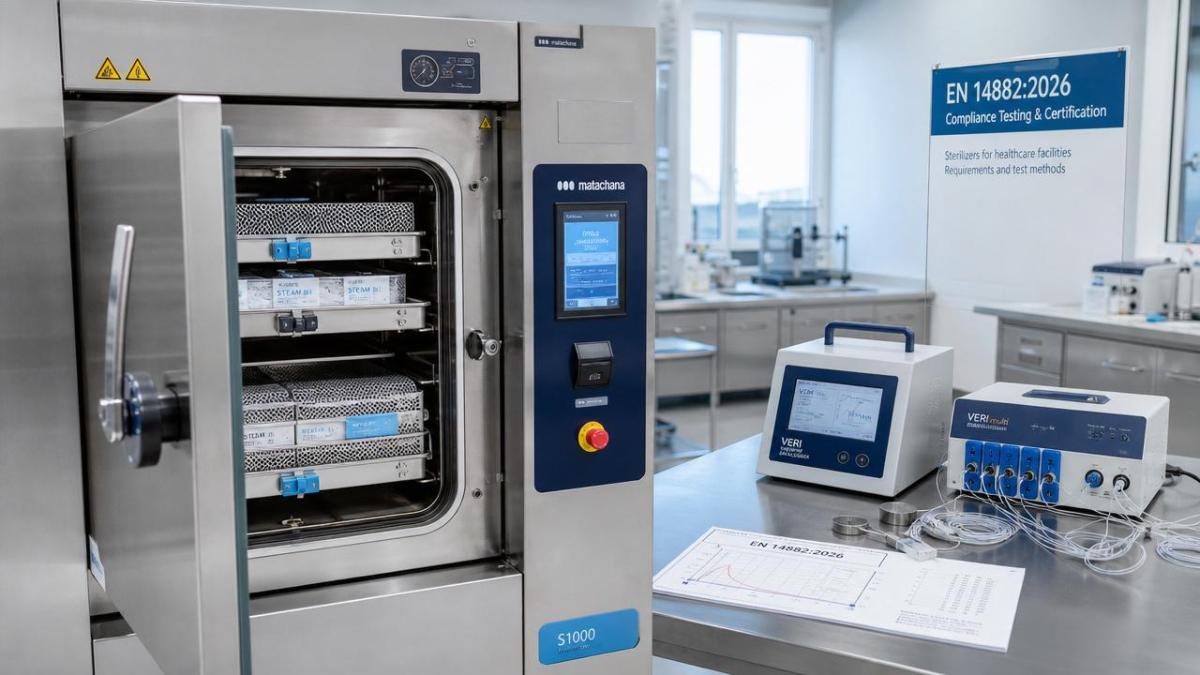
On June 1, 2026, a standards change in the EU medical device sterilization field moved from technical text into a practical compliance requirement for vacuum sterilizers. The update to EN 14882 introduces a new Dynamic Steam Penetration Resistance Index (DSPI) test and requires newly registered vacuum sterilizers to complete biological indicator penetration verification in at least five consecutive full-load cycles. For exporters, certification-related companies, procurement teams, and delivery planning functions, the issue is not only the test item itself, but also the immediate effect on certification timing, CE continuity, and market access arrangements.
What the new EN 14882 requirement now includes
According to the provided event information, the European Committee for Standardization (CEN) updated the medical device sterilization standard EN 14882 on June 1, 2026.
The update adds a Dynamic Steam Penetration Resistance Index (DSPI) test item. It also requires all newly registered vacuum sterilizers to complete biological indicator penetration verification under full-load conditions for at least five consecutive cycles.
The same event summary states that this change has extended the average certification cycle for Chinese exporting companies by 8 to 12 weeks, and that some small and medium-sized manufacturers face the risk of interruption when renewing CE certificates.
Where the pressure is likely to appear first
Export registration timelines become harder to manage
From an industry perspective, exporters are among the first to feel the impact because the updated requirement is tied directly to new registration for vacuum sterilizers. The practical pressure is likely to appear in certification scheduling, product launch timing, and shipment planning. What deserves closer attention is whether existing project timelines, customer commitments, and market entry arrangements still match the longer certification window described in the event summary.
Certification and testing workflows face a tighter sequence
For certification-related companies and testing service participants, the new DSPI requirement changes the structure of technical review rather than adding a purely administrative step. Analysis shows that the key issue is the need to prepare for full-load, multi-cycle biological indicator penetration verification, which may affect document readiness, test coordination, and submission sequencing. Companies involved in CE maintenance should pay close attention to whether technical files, validation records, and supporting test materials remain aligned with the new requirement.
Procurement and delivery planning may need earlier coordination
Procurement teams, distributors, and supply chain service providers may also be affected because certification delay can feed directly into delivery timing. Observably, when a standard introduces a more demanding validation item, purchasing schedules and delivery promises become more sensitive to certification progress. For commercial teams, this makes contract timing, supply commitments, and qualification review more important in day-to-day execution.
What companies should monitor in current practice
Review whether product files are ready for the new test path
Analysis shows that companies should first check whether technical documentation for newly registered vacuum sterilizers is prepared for the DSPI requirement and the full-load biological indicator penetration verification condition. The current event information does not provide detailed implementation guidance, so this should be treated as a compliance review priority rather than as a fully standardized execution checklist.
Watch certification continuity and renewal exposure
The event summary specifically points to CE renewal interruption risk for some small and medium-sized manufacturers. What deserves closer attention is whether pending renewals, registration transitions, or model updates could face timing conflicts if internal preparation is still based on earlier testing assumptions.
Adjust delivery and purchasing expectations with more buffer
Because the reported average certification cycle extension is 8 to 12 weeks for Chinese exporters, companies involved in sales, procurement, and fulfillment should monitor whether existing delivery schedules still leave enough compliance buffer. This is especially relevant where orders, tenders, or customer qualification reviews are closely linked to certificate validity or registration progress.
Continue tracking how the requirement is reflected in market documents
The provided information confirms the rule change, but it does not include detailed wording on how all downstream market participants will apply it in practice. For that reason, companies should continue watching certification communications, technical submission requirements, and any changes in tender or procurement documentation that may begin to reference the new testing expectation more explicitly.
Why this looks like an execution signal, not just a standards update
Observably, this development is more appropriate to understand as an already landed compliance change rather than a distant policy discussion, because the event information states that EN 14882 was updated on June 1, 2026 and links the new requirement directly to registration testing. At the same time, analysis should remain measured: the available input does not provide fuller details on enforcement nuances, transition handling, or document interpretation. That means the market signal is clear, while the exact pace of implementation across certification, procurement, and commercial practice still requires continued observation.
How this development is best understood now
At this stage, the EN 14882:2026 change matters less as a headline about one new test item and more as a practical shift in the compliance threshold for newly registered vacuum sterilizers. It points to longer certification preparation, higher sensitivity around CE continuity, and greater coordination needs between technical, regulatory, sales, and delivery teams. A rational reading is that this is a real rule implementation event with immediate operational consequences, while some execution details still need to be monitored through ongoing market practice.
Basis of this article and what still needs verification
This article is generated on the basis of the user-provided news title, event date, and event summary. For developments of this type, commonly relevant source categories may include official notices, regulator publications, trade or customs authority information, industry association updates, standards organization documents, and reporting by authoritative media.
No specific official source link was provided in the input. Because of that, the exact official document path and subsequent implementation wording still need to be verified on an ongoing basis. What still requires continued observation includes detailed policy wording, certification interpretation in practice, changes in tender documents, market feedback, and how companies are executing against the new requirement.
Recommended News
 Medical Compliance Reference: U.S. Infection Control Rules vs. GuidanceUse this medical compliance reference to distinguish U.S. infection control rules from guidance, clarify OSHA, CMS, FDA and CDC roles, and identify gaps before your next audit.
 Choosing Powered Exoskeleton Rehabilitation Devices for Post-Stroke Gait TrainingCompare powered exoskeleton rehabilitation devices for post-stroke gait training. Explore patient fit, safety, clinical evidence, and costs to choose the right system for your service.
 Commerce Ministry: Exoskeleton Sales on Key Platforms Rise 46.4% in Jan–Sep 2026Exoskeleton sales rose 46.4% on key platforms in Jan–Sep 2026, according to supplied Commerce Ministry data. Explore procurement insights and key checks for suppliers and buyers.
 Wearable Exoskeleton Rehabilitation Devices: Key Criteria for Gait TrainingCompare wearable exoskeleton rehabilitation devices for gait training. Discover key criteria for patient fit, safety, assistance, and clinical evidence to guide smarter selection.
 3D Intraoral Scans Show High Specificity for Caries Around Restorations3D intraoral scans show high specificity for caries around restorations, but sensitivity varies. Explore what these findings mean for secondary caries assessment.
 Specialty Medical Equipment Specifications: Performance and Compatibility ChecksEvaluate specialty medical equipment specifications with practical performance and compatibility checks. Discover how to avoid costly mismatches and make confident hospital purchasing decisions.
 Taixi Intelligent Exoskeleton Robot Showcased at the 140th Canton FairExplore Taixi Intelligent’s Yinyue X1 exoskeleton, reportedly showcased at the 140th Canton Fair. Discover its features and key compliance checks for overseas buyers.
 Robotic Rehabilitation Devices: How to Evaluate Systems for Gait TrainingCompare robotic rehabilitative medical devices for gait training. Discover how to assess patient fit, safety, clinical evidence, and costs to choose the right system for your program.
 UK Confirms Indefinite Recognition of CE-Marked Medical DevicesCE-marked medical devices gain indefinite recognition in Great Britain. Discover what this means for UKCA requirements, compliance planning and long-term supply continuity.
 Electric Dental Chairs: How to Assess Load Capacity, Positioning, and SafetyChoosing electric dental chair equipment? Learn how to verify load capacity, assess positioning, and check safety controls to make a confident, evidence-based purchase.
 Runyes Opens New Ningbo Plant at Global Partner SummitRunyes opens a new Ningbo plant at its 2026 Global Partner Summit. Explore what the expansion could mean for digital dental equipment, global partners, and procurement planning.
 Medical Think Tank Research for Procurement: Evidence and Bias ChecksMedical think tank procurement research: learn to verify evidence, spot bias, and assess lifecycle costs so you can turn insights into defensible hospital equipment decisions.
 Femtosecond Laser Docking: How to Troubleshoot Repeated Suction LossFemtosecond laser systems with docking: troubleshoot repeated suction loss, identify seal and vacuum issues, and explore key safety checks before another attempt. Read the guide.
 Sterilization Standards: What Documentation Do Hospitals Need for Audits?Strengthen sterilization compliance standards documentation with essential audit records, monitoring evidence, and traceability guidance. Discover how to prepare your hospital for audits.
 Hospital Disinfection System Manufacturers: Efficacy Evidence Buyers Should RequestChoosing a hospital disinfection systems manufacturer? Discover the efficacy reports, safety records, and site trials to request to verify claims and buy with confidence.
 Optical Diffraction Limits Explained: How Wavelength and NA Set ResolutionOptical diffraction limits explained: Learn how wavelength and NA shape resolution, compare optical specifications confidently, and spot misleading claims before choosing imaging equipment.
 Dialysis Center Equipment Checklist: What to Buy Before OpeningExplore end stage renal disease equipment for dialysis centers with an opening checklist for machines, water systems, and supplies. Plan smarter purchases and avoid costly startup delays.
 Dental Clinic Infection Control: Daily Checks for Instruments and SurfacesExplore infection control solutions for dental clinics with practical daily checks for instruments, sterilization, and surfaces. Learn how to spot failures and strengthen patient safety.
 Focused vs. Radial Shockwave Equipment: Clinical Uses and Selection CriteriaExplore this therapeutic equipment comparison of focused vs. radial shockwave systems. Compare clinical uses, targeting, evidence, and costs to choose the right fit for your clinic.
 What Is Driving Demand for Elderly Care Equipment in Home and Facility Settings?Elderly care equipment demand is rising as home care, staff shortages, chronic disease, and safety needs reshape buying decisions. Discover the trends driving smarter care.
 How to Evaluate a Dental Equipment Supplier Before Equipping a New ClinicDental equipment supplier evaluation made simple: compare workflow fit, installation, infection control, digital integration, service support, and total ownership costs before opening your clinic.













Global Trade Insights & Industry
Our mission is to empower global exporters and importers with data-driven insights that foster strategic growth.
Search News
Popular Tags
Industry Overview
The global commercial kitchen equipment market is projected to reach $112 billion by 2027. Driven by urbanization, the rise of e-commerce food delivery, and strict hygiene regulations.