 Get Insights


FDA Updates H2O2 Plasma Sterilizer Guidance
On August 7, 2026, the U.S. FDA issued an updated guidance, Hydrogen Peroxide Plasma Sterilization Devices: Technical Considerations for 510(k) Submissions, and stated that from November 1, 2026 onward, H2O2 plasma sterilization devices submitted under 510(k) must comply with EN ISO 14937:2025 instead of ISO 14937:2009. For manufacturers, exporters, biological indicator suppliers, and validation teams, the change is worth close attention because it directly affects registration pathways, validation evidence, and submission formatting.
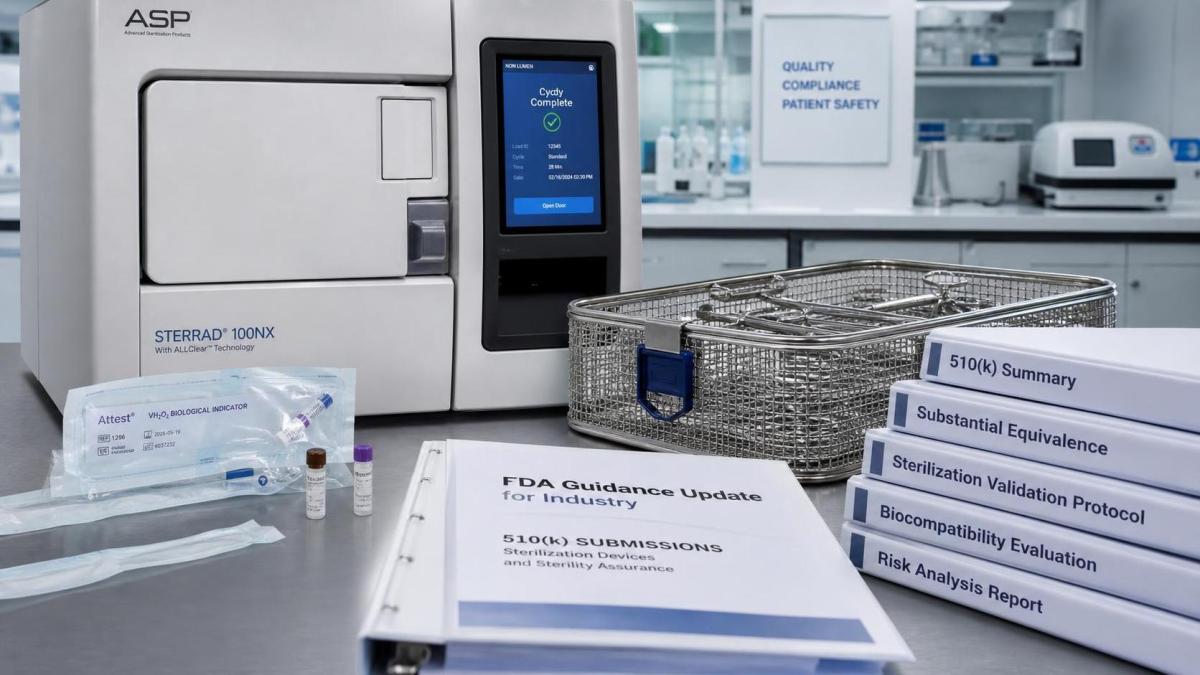
What the FDA updated in the 510(k) pathway
The FDA’s August 7, 2026 guidance update sets a new compliance point for H2O2 plasma sterilization devices in 510(k) submissions. Beginning November 1, 2026, these devices are required to align with EN ISO 14937:2025, which introduces updated expectations for microbial kill validation and process control. The new guidance replaces the older ISO 14937:2009 reference in this context.
The confirmed change is not a general market statement; it is a specific regulatory instruction tied to premarket submissions. In practical terms, it changes the technical standard that FDA reviewers will expect to see reflected in supporting documentation for affected devices.
Where the operational impact is likely to show up
Exporters and registration teams
Chinese exporters and other firms preparing U.S. market submissions are among the most exposed groups, because the change directly affects registration routes and the content of 510(k) dossiers. Any file built around the older standard will need to be checked against the new requirement before submission.
For these teams, the main issue is not only the standard number itself, but whether test packages, validation logic, and technical narratives still map cleanly to EN ISO 14937:2025.
Biological indicator selection and validation work
The update also affects biological indicator selection and validation report format. That matters because these elements are usually embedded in the evidence chain used to demonstrate sterilization performance. If the validation package is structured around older assumptions, it may no longer align with the revised expectations in the FDA guidance.
From a supply-chain perspective, this places pressure on validation labs, document preparation teams, and suppliers involved in test materials or supporting records.
Customs clearance and market access
The input information states that failure to adapt in time may lead to customs delays or loss of market access. Observably, that means the regulatory change can move beyond the filing stage and affect downstream logistics if product documentation no longer matches the current submission framework.
For companies shipping into the U.S., the question is not only whether the product works, but whether the supporting file can survive review without avoidable mismatch.
What companies should check now
Review the submission package against the new standard
Companies preparing or revising 510(k) files should confirm whether their current validation materials are aligned with EN ISO 14937:2025. That includes checking whether process control descriptions, microbial kill validation evidence, and report structure need revision before the November 1 deadline.
Reconfirm biological indicator and testing assumptions
The update makes biological indicator choice a practical issue, not a back-office detail. Teams should verify that the selected indicators and supporting test approach remain consistent with the revised standard and with the way the FDA guidance frames the submission.
Coordinate across regulatory, quality, and supply functions
This is not a change that can be handled by one department alone. Regulatory, quality, test-lab, and supply teams need a shared view of which documents, test records, and technical statements may need rework. If outside partners are involved, their deliverables should be checked against the same standard before filing.
Track any further FDA clarification
What deserves closer attention is whether the FDA issues additional clarification before the enforcement date. At this stage, the available information already sets a firm timetable, but implementation details can still matter for firms deciding how to restructure validation evidence or file sequencing.
How to read this update now
Analysis shows this is best understood as a concrete regulatory transition, not a broad industry forecast. The immediate signal is that FDA has moved the technical baseline for H2O2 plasma sterilization device submissions, and affected companies will need to align documentation accordingly. The longer-term meaning is less about market expansion or contraction and more about compliance discipline: firms that adapt early are more likely to avoid filing friction, while those that wait may face delays in review or clearance.
For now, the update is most useful as an operational marker. It signals what standard will govern upcoming 510(k) submissions and where documentation gaps are most likely to surface.
What this note is based on
This article is based on the user-provided headline, event date, and event summary. The source types normally associated with this kind of update include official FDA notices, guidance documents, standards body files, company regulatory statements, industry association updates, and authoritative media reports. No direct official source link was included in the input, so the specific source document still needs to be verified against the original FDA publication and any related standards materials. Further monitoring should focus on any subsequent FDA clarifications and how EN ISO 14937:2025 is applied in actual 510(k) submission practice.
Recommended News
 How to Evaluate a Dialyzer Consumables Supplier for Quality, Traceability, and Supply ContinuityDialyzer consumables supplier evaluation made practical: assess quality evidence, lot traceability, supply continuity, and total cost for safer sourcing decisions.
 Aging Healthcare Demand Forecast: Which Care Segments Will Face Capacity Gaps First?Aging healthcare demand forecast: discover which care segments will face capacity gaps first—from dialysis and rehabilitation to infection control—and how leaders can act early.
 Selecting Vision Correction Equipment for Europe: MDR, CE Evidence, and Service RequirementsVision correction equipment Europe: assess MDR and CE evidence, clinical performance, cybersecurity, site readiness, and service coverage for a safer, auditable selection.
 Medical Device Compliance: A Practical Guide to Core Documentation and StandardsMedical device compliance information: explore core documentation, risk management, validation, standards, and change control for safer, audit-ready devices.
 Dental CBCT Equipment Cost: Budgeting for Purchase, Installation, and OwnershipDental CBCT equipment cost explained: budget for purchase, installation, software, service, compliance, and ownership to build a smarter, lower-risk imaging investment plan.
 How to Build a Global Medical Compliance Reference for Multi-Market Device LaunchesGlobal medical compliance reference: build a traceable, market-ready framework that links requirements, evidence, claims, and lifecycle controls for successful device launches.
 How to Evaluate a Dental Chair Systems Manufacturer for Clinic ProjectsChoose a dental chair systems manufacturer with confidence. Compare ergonomics, infection control, digital compatibility, installation support, and lifecycle value for clinic projects.
 How to Evaluate Interactive Robotic Rehabilitation Systems for Stroke TherapyInteractive robotic rehabilitation systems for stroke therapy: learn how to assess safety, clinical evidence, workflow fit, data, and long-term value.
 Choosing Implant Dentistry Systems for Safe, Efficient Oral Surgery WorkflowsImplant dentistry systems for oral surgery: evaluate precision, digital workflows, sterilization, traceability, and supply support to build safer, more efficient surgical care.
 Where Wearable Rehab Technology Delivers Measurable Gains in Stroke RecoveryWearable rehab technology helps stroke programs improve gait, balance, arm use, and home practice with actionable data that guides smarter therapy decisions.
 Hospital Medical Device Technical Evaluation: Safety, Fit, and Lifecycle CriteriaMedical device technical evaluation for hospitals: explore safety, clinical fit, infection control, serviceability, and lifecycle criteria for smarter purchasing decisions.
 Medical Device Product Categories: How Hospitals Classify Equipment for Safer PurchasingMedical device product categories guide safer hospital purchasing. Compare clinical workflows, infrastructure, consumables, infection control, and lifecycle costs.
 Digital Dentistry Equipment Price: Budgeting for Scanners, CAD/CAM, and ROIDigital dentistry equipment price guide: budget for scanners, CAD/CAM, software, service, and total ownership costs. Build a practical ROI case before you buy.
 Which Phacoemulsification Parameters Matter Most for Dense Cataract Cases?Phacoemulsification technology parameters for dense cataracts: compare energy delivery, vacuum, flow, IOP control, and surge response for safer, stable surgery.
 Medical Equipment Specification Standards: A Practical Guide to Compliance ReviewMedical equipment specification standards guide: review compliance, essential performance, clinical fit, utilities, and lifecycle risks for safer procurement decisions.
 How to Evaluate a Digital Dentistry Systems Factory for Clinic Equipment ProjectsEvaluate a digital dentistry systems factory with confidence: compare workflow integration, quality control, documentation, installation, and long-term service costs.
 How to Evaluate an Infection Control Systems Wholesaler for Hospital ProjectsChoose an infection control systems wholesaler with proven compliance, validation support, local service, and transparent lifecycle costs for reliable hospital projects.
 Minimally Invasive Dentistry for Pediatric Care: Techniques and Case SelectionMinimally invasive dentistry for pediatric care: discover case selection, sealants, resin infiltration, and pulp-preserving techniques for healthier young smiles.
 What Is Smart Rehabilitation Equipment? Key Technologies for More Measurable TherapyExplore rehabilitation equipment smart technologies that deliver measurable therapy, adaptive support, and actionable data to improve patient outcomes and clinical decisions.
 How Real-Time Force Feedback Improves Safety in Exoskeleton RehabilitationReal time force feedback improves exoskeleton rehabilitation safety by detecting unstable loading, adapting support, and preventing harmful movement. Learn how it works.
 How to Evaluate Hemodialysis Systems for Hospitals and Clinics in Southeast AsiaHemodialysis systems Southeast Asia: explore key factors for hospitals and clinics, from water treatment and safety to service, consumables, and lifecycle cost.




Global Trade Insights & Industry
Our mission is to empower global exporters and importers with data-driven insights that foster strategic growth.
Search News
Hot Articles
Popular Tags
Industry Overview
The global commercial kitchen equipment market is projected to reach $112 billion by 2027. Driven by urbanization, the rise of e-commerce food delivery, and strict hygiene regulations.